Best Car Rental for Offroading: The Definitive 2026 Guide
The pursuit of unpaved exploration represents one of the most complex intersections in the modern travel industry. While standard vehicle hire is built upon the predictability of paved infrastructure, the off-road sector demands a radical departure from conventional logistics. Identifying the best car rental for offroading involves more than locating a vehicle with four-wheel drive; it requires a forensic understanding of mechanical limits, insurance “black zones,” and the specific topography of the American backcountry. From the slickrock of Moab to the expansive fire roads of the Pacific Northwest, the delta between a standard SUV and a true overland-capable rig is vast, often measured in inches of ground clearance and the presence of low-range gearing.
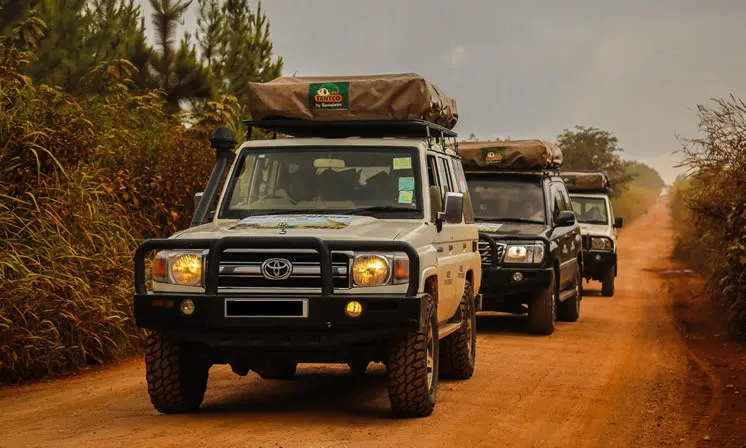
For the serious traveler, the challenge is systemic. Traditional rental giants operate fleets optimized for fuel efficiency and urban safety, frequently embedding “no-off-road” clauses in their fine print that can void insurance the moment a tire leaves the asphalt. This has birthed a specialized secondary market: boutique outfitters and peer-to-peer marketplaces that cater specifically to the “dirt-road” enthusiast. These providers offer vehicles equipped with the necessary hardware—all-terrain tires, winches, and snorkel intakes—that the average fleet manager would consider a liability.
In 2026, the landscape is further complicated by the emergence of electric off-roaders and sophisticated traction-management software. This shift requires a new type of literacy from the renter—one that balances mechanical empathy with an awareness of the legal frameworks governing vehicle use on public lands. This article provides a comprehensive editorial analysis of the off-road rental ecosystem, establishing a framework for decision-making that prioritizes safety, legal integrity, and mechanical suitability over mere aesthetic appeal.
Understanding “best car rental for offroading”
The search for the best car rental for offroading is frequently undermined by a fundamental misunderstanding of vehicle classification. In the rental industry, “SUV” is a marketing term, not a mechanical specification. A common oversimplification is the belief that any vehicle equipped with All-Wheel Drive (AWD) is suitable for off-pavement excursions. In reality, AWD systems—designed primarily for inclement weather on asphalt—lack the torque multiplication of a true 4WD system with a two-speed transfer case. Without a “Low Range” setting, a vehicle attempting to navigate steep, technical terrain or deep sand faces a high risk of transmission overheating and terminal mechanical failure.
Another layer of complexity involves the “Contractual Wall.” Even if a renter secures a Jeep Wrangler from a major airport agency, they are often legally prohibited from driving on “unpaved surfaces.” This creates a precarious situation where the mechanical capability of the vehicle is negated by the legal constraints of the agreement. Thus, the “best” rental is not merely the most capable machine, but the one whose contract explicitly permits its intended use. This distinction separates the casual “dirt-road” driver from the serious overlander who requires a vehicle that can survive a Level 4 trail without violating a lease agreement.
From a multi-perspective view, one must also consider the “Recovery Infrastructure.” A top-tier off-road rental provider doesn’t just hand over the keys; they provide a lifeline. This includes satellite communication devices (like a Garmin inReach), integrated recovery gear (MAXTRAX or winches), and a pre-vetted list of local recovery services. In the backcountry, “luxury” is not defined by leather seats, but by the reliability of the tire sidewalls and the clarity of the emergency protocol.
Deep Contextual Background: The Evolution of Overland Rental
Historically, the American rental market was binary: one rented a sedan for the city or a truck for work. The concept of renting for recreation—specifically off-roading—remained a niche activity served by “mom-and-pop” shops in gateway towns like Moab, Utah, or Ouray, Colorado. These early pioneers operated on a high-trust, high-deposit model, often renting modified older-model Toyotas or Jeeps that had been battle-hardened by local trails.
The 2010s saw a systemic shift driven by the “Overlanding” movement. As social media popularized remote vehicle-supported travel, demand surged for rentals that could facilitate “Instagram-worthy” expeditions. This era introduced the “Turn-key Rig,” where vehicles were rented fully equipped with rooftop tents, refrigerators, and modular kitchens. This professionalization brought higher standards of maintenance and more transparent insurance products, moving the industry away from “gray-market” rentals into a legitimate sector of the hospitality economy.
In the mid-2020s, we are seeing the “Technological Bifurcation” of the fleet. On one side are the “Mechanical Purists”—specialized agencies renting solid-axle vehicles like the Jeep Wrangler or Toyota 4Runner for technical rock crawling. On the other are the “Digital Explorers,” renting high-torque electric vehicles like the Rivian R1S or Ford F-150 Lightning. These EVs offer unparalleled traction control but introduce new logistical challenges regarding “Charging at the Edge.”
Conceptual Frameworks and Mental Models
To evaluate an off-road rental, we employ three specific mental models:
1. The Clearance-to-Complexity Ratio
This model dictates that as the complexity of the terrain (rocks, ruts, water) increases, the required ground clearance must increase at a non-linear rate.
-
The Model: Assess the “Breakover Angle” and “Approach Angle” of the rental vehicle.
-
The Limit: A vehicle with low-hanging plastic air dams (common on rental-fleet SUVs) will suffer cosmetic and functional damage on even moderate fire roads.
2. The “Traction Triangle”
Off-road success is a product of three factors: Tires, Torque, and Tech.
-
The Model: Evaluate if the vehicle has All-Terrain (A/T) tires (not street tires), a 4-LO transfer case, and electronic lockers or sophisticated crawl control.
-
The Limit: If any one side of the triangle is missing (e.g., a 4WD truck on highway tires), the vehicle’s capability is significantly compromised.
3. The Recovery Self-Sufficiency Model
This framework assumes that help is not coming.
-
The Model: Total Value = Vehicle Capability + Included Recovery Gear + Communication Tools.
-
The Limit: A highly capable Jeep is a poor rental if it lacks a full-size spare tire or a jack capable of operating on uneven ground.
Key Categories of Off-Road Rental Solutions
Finding the best car rental for offroading requires matching the agency’s fleet to the specific biome of the destination.
| Category | Typical Vehicle | Best Use Case | Significant Trade-off |
| Technical Crawler | Jeep Wrangler Rubicon | Rock crawling; Moab/Rubicon Trail | Poor highway manners; loud cabin |
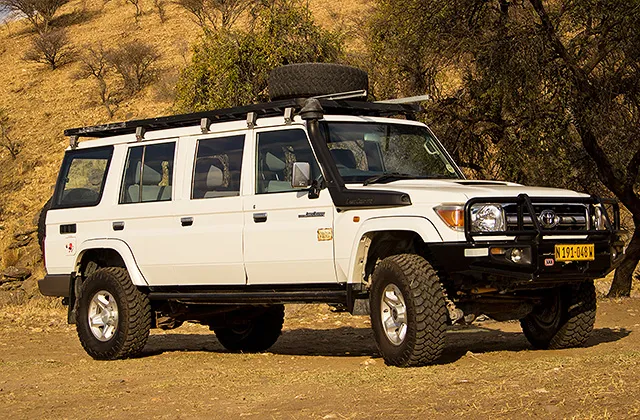
| Overland Expedition | Toyota 4Runner/Land Cruiser | Multi-day remote camping | High fuel consumption; heavy |
| High-Speed Desert | Ford Raptor / TRX | Sand dunes; open desert washes | Massive footprint; high deposit |
| Utility Pickup | Chevrolet Silverado Z71 | Fire roads; hauling gear | Long wheelbase limits maneuverability |
| Electric Off-Roader | Rivian R1T / Hummer EV | Technical trails near charging hubs | Weight (can sink in soft sand) |
| Boutique Camper | Mercedes Sprinter 4×4 | Light off-road; nomadic living | Low clearance; high center of gravity |
Decision Logic: The “Point of No Return”
If the destination involves “unimproved” roads (Bureau of Land Management or Forest Service roads), a National Fleet vehicle is a high-risk gamble. For “primitive” trails or “backcountry” routes, a Boutique Outfitter is the only logical choice due to contract legality and specialized equipment.
Detailed Real-World Scenarios and Operational Logic
Scenario 1: The “Death Valley Solo Traverse”
A photographer wants to reach the Racetrack Playa in Death Valley National Park.
-
The Context: Sharp volcanic rock; extreme heat; 50+ miles from cellular service.
-
Decision Point: Standard Hertz SUV vs. FarOutRide Jeep.
-
Failure Mode: Using a standard SUV leads to sidewall punctures from “tire-shredding” rocks. Airport spares are often “donuts” and useless here.
-
The Strategic Fix: Rent a vehicle with Load Range E (10-ply) tires. The best car rental for offroading in this scenario is one that provides two full-size spare tires.
Scenario 2: The “Colorado Alpine Loop”
A family wants to drive the high-altitude passes around Silverton and Lake City.
-
The Context: Steep grades; narrow shelf roads; loose scree.
-
Decision Point: Power vs. Size.
-
Failure Mode: Renting a full-size long-bed pickup makes the “switchbacks” on Black Bear Pass nearly impossible and dangerous.
-
The Strategic Fix: A short-wheelbase Jeep Wrangler or a mid-size Toyota Tacoma. The smaller turning radius is a safety feature in this vertical landscape.
Planning, Cost, and Resource Dynamics
The economics of off-roading are defined by “Hardware Wear.” Unlike highway driving, off-roading consumes tires, brake pads, and suspension components at an accelerated rate.
| Expense Item | Boutique Off-Road Agency | Peer-to-Peer (Turo/Outdoorsy) |
| Daily Rate | $250 – $450 | $150 – $350 |
| Cleaning Fee | Included or $50 | $100+ (Strict “No Mud” rules) |
| Insurance Premium | High (Specialized Off-Road) | Variable (Check “Off-Road” exclusion) |
| Required Deposit | $1,000 – $3,000 | $500 – $1,500 |
| Equipment Add-ons | Often bundled (Comms, Tents) | Per-item fees |
The Opportunity Cost of “Mechanical Empathy”
Off-road rentals require a “Slow-is-Pro” mindset. Budgeting extra time for “Airing Down” tires (lowering pressure for traction) and “Airing Up” is essential. If a renter rushes, the cost is often a bent rim or a popped bead—expenses that are rarely covered by insurance.
Tools, Strategies, and Support Systems
A professional-grade off-road rental should include or be supplemented by:
-
On-Board Air Compressor: Essential for re-inflating tires after technical sections.
-
Topographical GPS (On-Device): Standard Google Maps fails without signal. Gaia GPS or OnX Offroad with downloaded maps are mandatory.
-
Tire Plug Kit: Even with a spare, knowing how to plug a puncture is a basic survival skill for the renter.
-
Kinetic Recovery Rope: Safer and more effective than traditional chains or tow straps.
-
Vehicle Health Telematics: Systems that monitor transmission temp—critical for high-torque low-speed climbs.
-
Spotter’s Guide: High-end rentals often provide “Line Choice” tutorials for the specific trails in their region.
Risk Landscape and Failure Modes
The “Failure Taxonomy” of off-road rentals is distinct from urban hire.
-
The “Hydro-Lock” Event: Driving through water deeper than the vehicle’s intake, causing terminal engine destruction. (Note: Snorkels are for dust, not necessarily for deep diving).
-
The “Undercarriage Scrape”: Minor aesthetic damage to “Skid Plates” is expected; however, puncturing an oil pan or fuel tank ends the trip.
-
The “Insurance Gap” Trap: Most “Loss Damage Waivers” (LDW) from credit cards explicitly state they do not cover “off-pavement” incidents. Renters are often 100% liable for the full replacement cost of a $60,000 vehicle.
Governance, Maintenance, and Long-Term Adaptation
For the agency, “Maintenance Governance” is about tracking “Trail Hours” rather than “Highway Miles.”
-
Review Cycles: Suspension components (bushings, shocks) should be inspected every 500 trail miles.
-
Adjustment Triggers: If a vehicle pulls to one side, it indicates a bent tie-rod or alignment issue from a “Hard Hit.”
-
Checklist: A layered 50-point inspection before every hand-over, focusing on “Visual Fractures” in the chassis.
Measurement, Tracking, and Evaluation
How do you evaluate if you chose the best car rental for offroading?
-
Leading Indicator: The quality of the pre-rental briefing. Did the agent ask about your trail experience and intended route?
-
Lagging Indicator: The “Post-Trip Inspection” time. A professional agency spends 20+ minutes inspecting the vehicle upon return, including the undercarriage.
-
Documentation Example: A “Condition Photo Log” showing the state of the tires and skid plates at checkout.
Common Misconceptions and Oversimplifications
-
“A winch makes me invincible.” Correction: A winch is a tool of last resort and requires significant training to use safely without snapping a line.
-
“Jeeps are the only off-roaders.” Correction: Modern “Independent Front Suspension” (IFS) vehicles like the Ford Bronco or Toyota 4Runner are often more comfortable for $90\%$ of off-roaders.
-
“I can just wash the mud off.” Correction: Modern sensors and radiators can be permanently damaged by “caked-on” mud that acts as an insulator, causing overheating.
-
“High clearance means I can go anywhere.” Correction: Clearance doesn’t compensate for a lack of driver skill or poor line choice.
-
“The spare tire is fine.” Correction: Check the age and pressure of the spare. An 8-year-old spare tire will dry-rot and fail the moment it touches a hot rock.
-
“4WD is the same as AWD.” Correction: 4WD has a mechanical linkage that forces wheels to turn together; AWD allows wheels to slip, which is useless on a “hanging” wheel.
Ethical, Practical, or Contextual Considerations
The ethics of off-roading center on the “Tread Lightly!” principles. The best car rental for offroading is one that promotes responsible land use. This includes staying on marked trails, avoiding “sensitive” biological crusts in the desert, and managing waste. As public lands face increasing pressure, rental agencies are becoming the “First Line of Defense,” educating tourists on how to explore without destroying the very ecosystems they came to see. Practicing “Mechanical Empathy”—driving at a pace that respects the vehicle and the land—is the hallmark of the experienced editorial traveler.
Conclusion
Navigating the world of off-road rentals requires a shift from a “Transactional” mindset to an “Operational” one. The best car rental for offroading is a synthesis of mechanical integrity, contractual permission, and robust support. In the American backcountry, where the environment is indifferent to your itinerary, the vehicle is your primary survival tool. By moving beyond the surface-level marketing of “4×4” badges and conducting a disciplined audit of tires, recovery gear, and insurance specifics, the traveler can transform a high-risk gamble into a calculated expedition. The ultimate goal is not just to reach the destination, but to ensure that the vehicle returns in a condition that allows the next explorer to seek their own horizon.