How to Manage Fuel Costs: The Definitive 2026 Strategy Guide
The global energy landscape in 2026 remains a study in volatility, where the price at the pump is merely the visible tip of a vast iceberg of geopolitical tension, supply chain logistics, and refining capacities. For both the individual motorist and the fleet supervisor, fuel is not just an operating expense; it is a variable that fluctuates with the unpredictability of a liquid commodity market. Managing this expense requires more than just searching for the cheapest station on a mobile app. It demands a systemic approach that addresses the intersection of mechanical efficiency, behavioral psychology, and strategic procurement.
The difficulty in controlling energy expenditures lies in the “Elasticity Paradox.” While fuel prices are highly elastic—changing daily based on international events—the average driver’s demand is often inelastic. Most people cannot simply choose not to commute or transport goods when prices spike. This creates a vulnerability that can only be mitigated through long-term structural changes in how vehicles are operated and maintained. We must move beyond the superficial advice of “driving slower” and examine the thermodynamic and economic realities of energy consumption.
To master this discipline, one must view a vehicle as a specialized energy-conversion unit. Every gallon of fuel represents a specific potential of kinetic energy, much of which is lost to heat, friction, and aerodynamic drag. Understanding how to minimize these losses—while simultaneously navigating the financial “retail traps” of the petroleum industry—forms the basis of a professional-grade cost-management strategy. This article serves as a definitive roadmap for those seeking to insulate their finances from the inherent instability of the fossil fuel market.
Understanding “how to manage fuel costs.”
When we discuss how to manage fuel costs, we are essentially discussing the optimization of “Cost Per Ton-Mile.” A multi-perspective explanation of this task involves three distinct layers: the mechanical (the vehicle’s health), the operational (how the vehicle is moved), and the fiscal (how the energy is purchased). A common misunderstanding is the hyper-focus on “Price Per Gallon.” While a five-cent difference between stations seems significant, it is often negated by the “Deviation Cost”—the fuel wasted driving out of one’s way to reach the cheaper pump.
Oversimplification risks often lead to the “Maintenance Vacuum.” Drivers frequently ignore the fact that a dirty air filter or slightly misaligned wheels can degrade fuel economy by $10\%$ to $15\%$. If one manages the price of the fuel but ignores the efficiency of the machine consuming it, the strategy is fundamentally broken. Furthermore, the psychological element of “Aggressive Acceleration” is often underestimated. The kinetic energy required to move a two-ton object from 0 to 60 mph increases exponentially with the speed of that acceleration, yet most drivers treat the throttle as a binary switch rather than a precision instrument.
Strategic mastery in this area requires an “End-to-End” view of the energy lifecycle. This includes recognizing that the “best” fuel is not always the cheapest, but the one that offers the highest “Detergent Quality” to prevent carbon buildup, which in turn preserves long-term fuel economy. True management is a proactive, data-driven habit rather than a reactive response to a price spike on the news. It is the difference between surviving a market fluctuation and systematically reducing one’s energy footprint regardless of the market’s direction.
Deep Contextual Background: The Global Energy Matrix
The ability to control fuel expenses is inextricably linked to the evolution of the Internal Combustion Engine (ICE) and its modern competitors. Historically, fuel was a negligible cost for many in the West during the mid-20th century. The 1973 oil embargo changed this permanently, introducing the concept of “Fuel Economy” into the mainstream consciousness and leading to the creation of CAFE (Corporate Average Fuel Economy) standards in the United States.
By the early 2000s, the rise of “Global Just-in-Time” logistics meant that fuel costs became a primary driver of inflation. If diesel prices rose in the Midwest, grocery prices rose in New England. This systemic link forced the development of technologies like cylinder deactivation, turbocharging, and hybrid-electric powertrains. However, as vehicles became more efficient, they also became heavier and more complex, creating a “Stagnation Point” where mechanical gains were often offset by consumer demand for larger SUVs and trucks.
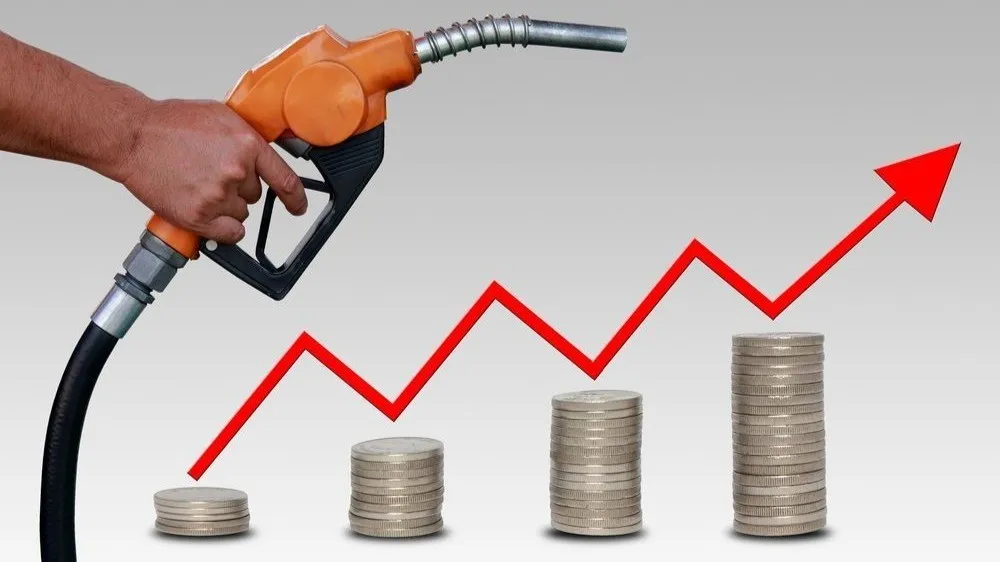
In 2026, we occupy a “Hybrid Transition” period. While electric vehicles (EVs) offer a path away from liquid fuel, the majority of global transport still relies on petroleum. Refineries have shifted their focus toward higher-margin products, often leading to a “Tightness” in the supply of standard gasoline and diesel. Understanding this context helps an operator realize that fuel prices are no longer purely about “Oil Per Barrel,” but are increasingly influenced by refining capacity, regional environmental regulations, and the “Carbon Intensity” of the fuel itself.
Conceptual Frameworks and Mental Models
To effectively navigate energy expenses, use these three analytical frameworks:
1. The Aero-Thermal Efficiency Model
This model treats every vehicle as an object fighting two forces: wind resistance and internal heat.
-
The Model: Efficiency is lost at the square of the speed increase. Above 55 mph, aerodynamic drag becomes the dominant consumer of fuel.
-
The Application: Managing costs means managing “Peak Velocity.” Driving at 65 mph instead of 75 mph can yield a $15\%$ reduction in fuel consumption with only a negligible increase in travel time.
2. The “Idle-is-Waste” Framework
This model views an idling engine as a machine with zero percent efficiency.
-
The Model: An idling engine consumes between 0.2 and 0.5 gallons per hour while providing zero miles of travel.
-
The Application: This framework prioritizes “Engine Management” over “Comfort Management.” It encourages the use of stop-start technology and identifies “Drive-Thru” lines as high-cost environments.
3. The Energy-Density/Price Ratio
Not all fuels provide the same “Work Per Dollar.”
-
The Model: Evaluate fuel based on its BTU (British Thermal Unit) content relative to its price.
-
The Application: Some “Economy” fuels with high ethanol content have lower energy density, meaning the vehicle must burn more to achieve the same result. The “Management” choice is often the mid-grade fuel that provides a better “Miles Per Dollar” outcome despite a higher sticker price.
Key Categories of Fuel Reduction Strategies
Effective management requires a multi-pronged attack on several fronts simultaneously.
| Strategy Category | Implementation | Potential Savings | Strategic Trade-off |
| Aerodynamic Optimization | Removing roof racks; windows up | 3 – 7% | Reduced cargo capacity or utility |
| Rolling Resistance | Proper tire inflation and alignment | 2 – 5% | Frequent monitoring required |
| Behavioral Modification | “Pulse and Glide”; slow starts | 10 – 25% | Increased mental focus while driving |
| Logistical Consolidation | Route planning: “Left-turn avoidance.” | 10 – 15% | Requires pre-trip planning time |
| Fiscal Procurement | Loyalty programs; cash discounts | 2 – 4% | Limited to specific station brands |
| Weight Management | Cleaning out trunk; removing seats | 1 – 2% | Minimal gain for significant effort |
Decision Logic: The “Value of Time” vs. “Fuel Saved”
When implementing these categories, the operator must avoid “Hyper-miling Burnout.” Forcing a 20-minute detour to save $2.00 in fuel is a net loss when considering the opportunity cost of time and the additional wear on the vehicle’s tires and brakes.
Detailed Real-World Scenarios and Operational Logic
Scenario 1: The “Cold Start” Suburban Commuter
A driver travels 15 miles to work in a temperate climate with multiple stoplights.
-
The Context: Short trips prevent the engine from reaching “Optimal Thermal Operating Temperature,” where it is most efficient.
-
Failure Mode: Starting the car 10 minutes early to “warm it up” in the driveway. This wastes fuel and increases engine wear.
-
The Strategic Fix: Use a block heater in winter and drive immediately but gently. Combine the morning commute with errands (trip chaining) so the engine remains warm between stops.
Scenario 2: The “High-Speed” Logistics Courier
A van delivering packages between two cities 100 miles apart.
-
The Context: High highway miles where drag is the primary enemy.
-
Failure Mode: Maintaining 80 mph to “save time.” The time saved is often less than 12 minutes, but the fuel cost increases by $25\%$.
-
The Strategic Fix: Implementing a “Speed Governor” or cruise control set to 62 mph. This optimizes the engine’s “BSFC” (Brake Specific Fuel Consumption) map.
Planning, Cost, and Resource Dynamics
The economics of fuel management involve both direct expenses and “Deferred Costs.”
| Expense Factor | Low-Effort Management | High-Effort Management |
| Fuel Procurement | Credit card at the nearest pump | App-based price tracking + Cash |
| Tire Maintenance | Check when the light comes on | Weekly manual PSI adjustments |
| Engine Health | Standard oil at 10k miles | Synthetic high-mileage + fuel cleaners |
| Route Planning | GPS “Fastest Route” | GPS “Fuel Efficient” + Human audit |
The “Octane Myth” and Financial Planning
A significant portion of the public believes that “Premium” fuel is “cleaner” or “better” for all cars. Unless an engine is specifically tuned for high octane (typically performance or turbocharged engines), using premium is a pure financial loss with zero gain in MPG. Managing costs involves strictly adhering to the manufacturer’s minimum requirement rather than the marketing department’s “Gold” labels.
Tools, Strategies, and Support Systems
To institutionalize these savings, one should deploy a “Tech Stack” for energy management:
-
OBD-II Telematics: Small plug-in devices that provide real-time feedback on “Engine Load” and “Instantaneous MPG.”
-
Tire Pressure Monitoring Systems (TPMS): Upgrading to high-accuracy sensors that alert the driver to even a 1-PSI drop.
-
Route Optimization Software: For those with multiple stops, software that minimizes idling at intersections and avoids high-congestion corridors.
-
Fuel Hedging (For Small Business): Using fleet cards that lock in a price or provide “Wholesale-Minus” pricing structures.
-
Aerodynamic Add-ons: Underbody shields and “Air Dams” for older vehicles to bring them closer to modern drag coefficients.
-
“Gas Buddy” / Crowdsourced Data: Leveraging real-time data to identify “Price Wars” between competing stations at specific intersections.
Risk Landscape and Failure Modes
The pursuit of fuel efficiency can sometimes lead to “Efficiency Cascades” that cause more harm than good.
-
The “Drafting” Danger: Following semi-trucks closely to reduce wind resistance. This is a high-risk failure mode that leads to rock chips, obscured vision, and catastrophic collisions. The fuel saved is never worth the insurance deductible.
-
The “Low-Octane Knock”: Using 87-octane in a car requiring 91. The engine’s computer will retard the timing to prevent damage, which lowers fuel economy and can cause long-term valve damage.
-
The “Under-Inflated” Trap: While over-inflating tires can save fuel, it reduces the “Contact Patch,” leading to poor braking performance in the rain.
Governance, Maintenance, and Long-Term Adaptation
To maintain topical authority over one’s own budget, a “Governance Calendar” is required:
-
The Monthly Alignment Check: Visual inspection for uneven tire wear.
-
The Seasonal “Weight Audit”: Removing snow gear in the summer and beach gear in the winter. Every 100 lbs of unnecessary weight reduces MPG by roughly $1\%$.
-
Review Cycles: Every quarter, compare your “Actual MPG” against the “EPA Estimate.” If your vehicle is performing significantly below the estimate, it indicates a mechanical failure (such as an O2 sensor or a sticking brake caliper) rather than a driving style issue.
Measurement, Tracking, and Evaluation
You cannot manage what you do not measure.
-
Leading Indicator: “Throttle Position Percent.” This is how often you are aggressively pushing the pedal.
-
Lagging Indicator: “Monthly Fuel Spend as a % of Income.”
-
Documentation Example: A simple spreadsheet or app log tracking “Gallons Pumped” vs. “Odometer Reading.” Relying on the vehicle’s “In-Dash MPG” is often inaccurate by $5-10\%$ as it is based on fuel injector pulse-width estimates rather than actual volume.
Common Misconceptions and Oversimplifications
-
“Turning on the AC is always worse than rolling down windows.” Correction: At speeds above 45 mph, the aerodynamic drag of open windows is more costly than the mechanical load of the AC compressor.
-
“Filling up in the morning gets you more fuel because it’s cold/dense.” Correction: Fuel is stored in underground tanks that remain at a constant temperature. The difference is statistically insignificant.
-
“Manual transmissions are more efficient than automatics.” Correction: In 2026, modern 8-to-10-speed automatics and CVTs are significantly more efficient than any human shifter could ever be.
-
“Cruise control always saves fuel.” Correction: On very hilly terrain, a human who can “anticipate” a hill and allow speed to bleed off slightly is more efficient than a cruise control system that “floors it” to maintain a specific number.
-
“New spark plugs will double your MPG.” Correction: They will only restore MPG if the old ones were fouled. There is no such thing as a “Magic” spark plug.
Ethical, Practical, or Contextual Considerations
The ethics of fuel management are shifting toward “Carbon Responsibility.” Even for those who are not motivated by environmentalism, the “Social License to Operate” for a high-consumption vehicle is becoming more expensive through carbon taxes and urban congestion fees. Practically, managing fuel is the first step toward “Energy Independence.” The less energy you require to perform your daily tasks, the more resilient you are to global supply shocks. In a world where the “Energy Return on Investment” (EROI) is tightening, efficiency is the only sustainable long-term hedge.
Conclusion
Managing the cost of energy is not a task that ends with the selection of a fuel-efficient vehicle. It is a continuous loop of mechanical stewardship, behavioral discipline, and fiscal awareness. By applying the frameworks of Aero-Thermal efficiency and trip-chaining logistics, the driver moves from being a victim of the market to an active manager of their own resources. The how to manage fuel costs challenge is ultimately a test of one’s ability to harmonize the needs of the modern lifestyle with the physical constraints of the engine and the volatility of the global pump. Mastery lies in the details—the extra 2 PSI in the tires, the 5 mph reduction on the highway, and the refusal to pay for octane that the engine cannot use.