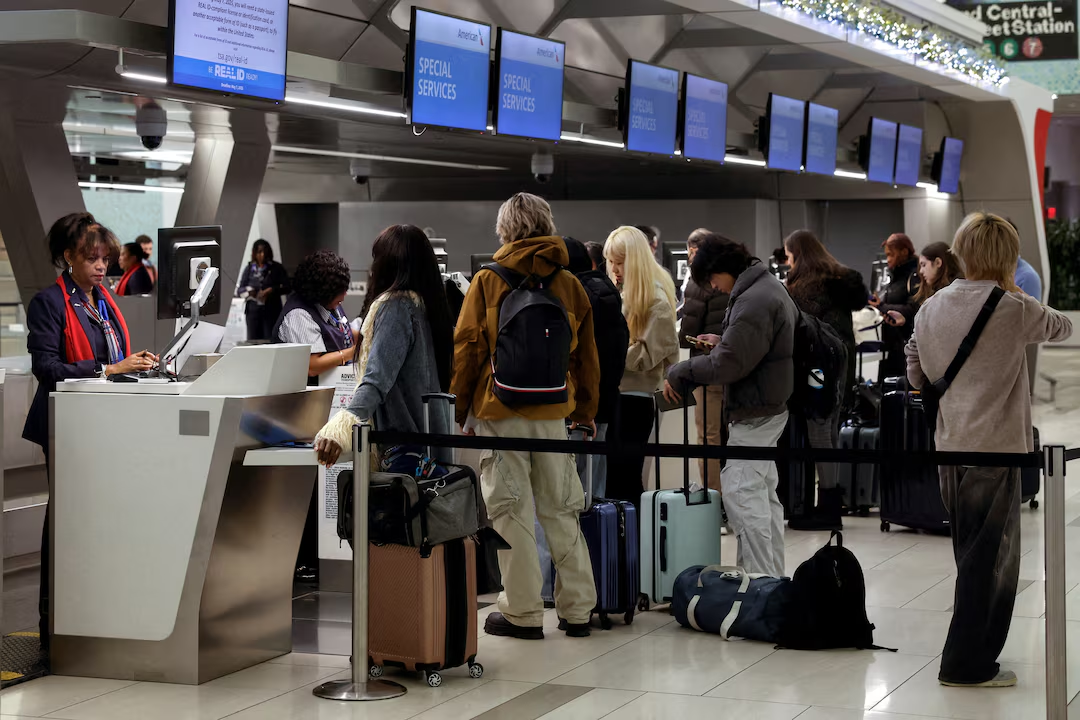
How to Reduce Airport Fees: A Strategic Guide to Terminal Logistics
The modern airport is no longer merely a gateway for transit; it has evolved into a sophisticated, high-margin commercial ecosystem designed to extract incremental value from the captive traveler. While airfare often dominates the pre-trip financial discourse, the ancillary expenses incurred within the terminal—commonly referred to as “airport fees”—represent a significant, and often overlooked, leakage of travel capital. These costs are rarely presented as a single, transparent line item. Instead, they are distributed across baggage surcharges, ground transportation premiums, currency spreads, and the “convenience tax” embedded in terminal concessions.
For the strategic traveler, the challenge lies in the fact that these fees are structurally integrated into the aviation business model. Airports and airlines operate on a system of “asymmetric convenience,” where the premium for immediate access—whether to a parking space, a meal, or local currency—is set at the highest point the market will bear. To mitigate these costs, one must transition from a passive consumer to an active auditor of the terminal experience. This requires an understanding of where the airport’s authority ends and where consumer choice can be reclaimed through forward-deployed planning and technological leverage.
This exploration serves as a definitive reference for deconstructing and neutralizing the financial friction of the airport environment. By analyzing the systemic drivers of terminal pricing and applying a rigorous framework of “pre-emptive logistics,” travelers can insulate their budgets from the predatory pricing models that define contemporary air travel. We will move beyond surface-level tips to examine the governance of airport commerce and the tactical adjustments required to navigate these high-cost zones with fiscal integrity.
Understanding “how to reduce airport fees”
A rigorous analysis of how to reduce airport fees reveals that successful mitigation is an exercise in “temporal arbitrage”—using time and information to bypass the premiums charged for convenience. The primary misunderstanding among travelers is the belief that these fees are fixed or unavoidable. In reality, airport-related costs exist on a spectrum of necessity. While government-mandated departure taxes are largely non-negotiable, the vast majority of terminal-side expenses—ranging from “junk fees” for boarding pass printing to the 15%–20% spreads on currency exchange—are entirely elective.
Oversimplification in this domain often ignores the “captive audience” effect. Airports are designed to limit alternatives once a passenger passes through security. Therefore, reducing fees is not a task performed inside the terminal; it is an architecture built weeks before the flight. It involves the preemptive acquisition of resources—refillable water filtration, offline-mapped ground transit, and pre-booked parking—that remove the need to transact within the airport’s high-margin zones. To manage these costs is to recognize the terminal as a high-friction environment where every spontaneous decision carries a financial penalty.
Furthermore, the strategy for fee reduction must account for the “bundling” of services. Airlines frequently obscure airport-level costs by folding them into fare classes. A “Basic Economy” ticket may appear fiscally superior until the secondary costs of gate-checked bags and terminal check-in fees are tallied. Thus, a professional approach to reduction requires a “Total Cost of Transit” (TCT) calculation, which compares the all-in cost of different travel methods rather than just the base ticket price.
Contextual Evolution: From Public Service to Revenue Engine
Historically, airports were treated as public utilities, funded by government subsidies and focused primarily on the safe movement of aircraft. However, the global shift toward airport privatization and “corporatization” in the late 20th century transformed these spaces into retail hubs. Today, many major international hubs generate more than 50% of their revenue from “non-aeronautical” sources—parking, concessions, and property rentals.
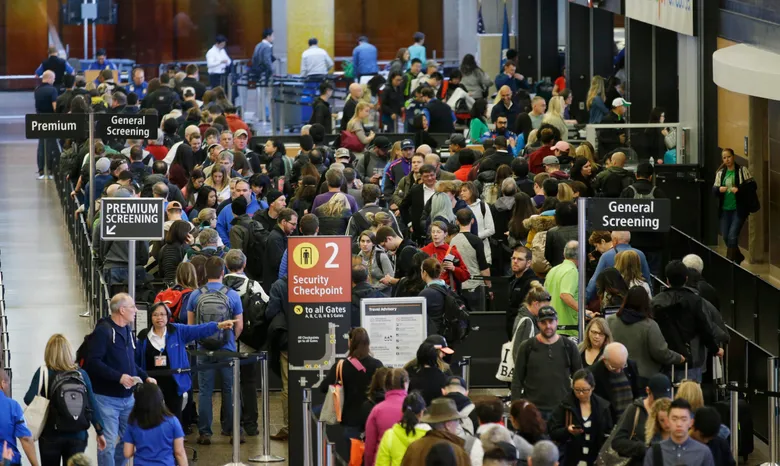
This systemic shift has turned the passenger into a “commercial unit.” The layout of modern terminals is intentionally designed to maximize “dwell time” in retail corridors, often forcing travelers to walk through duty-free zones before reaching their gates. In 2024, the International Air Transport Association (IATA) reported that airports worldwide collected approximately $60.4 billion in passenger-related fees. As we move through 2026, this trend has intensified, with airports implementing more sophisticated “dynamic pricing” for services like premium security lanes and lounge access.
Conceptual Frameworks for Terminal Navigation
To insulate oneself from the escalating cost of airport transit, the following mental models are essential:
-
The “Zero-Terminal Transaction” Model: The most effective way to reduce fees is to adopt a policy of zero transactions within the airport perimeter. This forces the planning of food, hydration, and connectivity to occur in the “competitive market” outside the airport.
-
The “Buffer vs. Premium” Framework: Recognize that being “rushed” is the primary driver of fee incurrence. The “Late-Arriver Tax”—paying for valet parking or priority security because of poor timing—is the most common elective fee.
-
The “Digital Counter-Surveillance” Model: Use technology to bypass the airport’s information silos. This includes using third-party transit apps to find off-site parking and currency apps to identify the mid-market rate before entering a foreign exchange kiosk.
Taxonomy of Fee Categories and Strategic Trade-offs
Airport expenses are not monolithic. They fall into distinct categories, each requiring a specific neutralization strategy.
| Fee Category | Primary Driver | Mitigation Strategy | Efficiency Gain |
| Ground Transit | Location Premium | Off-site parking / Public rail | High (40–60%) |
| Baggage & Weight | Operational Penalty | Pre-paid online / Home weighing | Moderate |
| Financial/Forex | Captive Spread | ATM withdrawals / Neo-banks | Very High (10–15%) |
| Concessions | Rent-back pricing | Personal provisioning | Moderate |
| Administrative | Staff Intervention | Digital check-in / Mobile pass | High (Avoids $20–$50) |
| Premium Access | Congestion pricing | Loyalty status / Credit card perks | Utility-based |
Realistic Decision Logic
The decision to pay a fee should be based on a “Productivity Audit.” If a $40 lounge fee provides four hours of high-speed Wi-Fi and workspace that allows for $400 worth of billable labor, the fee is a justified investment. Conversely, a $40 parking surcharge for “convenience” that only saves ten minutes of walking is a low-utility expenditure.
Operational Scenarios: Navigating Friction and Failure
Scenario 1: The “Sayonara Tax” and Exit Levies
Several nations, including Japan and Indonesia, have implemented “Departure Taxes” that are sometimes collected at the counter if not included in the ticket.
-
The Conflict: A traveler arrives at the gate with no local currency and a credit card that isn’t accepted at the tax counter.
-
The Failure Mode: Missing the flight due to a $10–$20 administrative requirement.
-
The Solution: Always verify if the “Airport Improvement Fee” (AIF) is included in your electronic ticket (indicated by codes like “US,” “AY,” or “XF” in the fare breakdown).
Scenario 2: The Currency Exchange “Zero Commission” Trap
An airport kiosk advertises “0% Commission” but offers a rate 15% below the market average.
-
The Conflict: The traveler believes they are saving on fees while losing significant capital through the spread.
-
The Failure Mode: Converting $1,000 and losing $150 to the “invisible” fee.
-
The Solution: Use an ATM within the terminal that belongs to a major international bank network, which typically offers the “Interbank” rate.
Economic Dynamics: Direct and Indirect Costs
The financial impact of airport fees is often obscured by their small, individual sizes. However, when aggregated, they represent a significant percentage of the total trip cost.
Table: Range of Potential Ancillary Savings (Per Trip)
| Item | Potential Airport Cost | Mitigated Cost | Net Savings |
| Parking (4 Days) | $120 (On-site) | $45 (Off-site + Shuttle) | $75 |
| Baggage (Overweight) | $100 | $0 (Pre-weighed) | $100 |
| Meal + Beverage | $35 | $5 (Personal prep) | $30 |
| Check-in Fee | $25 | $0 (Mobile/Online) | $25 |
| Currency Spread | $80 (on $500) | $5 (ATM fee) | $75 |
| TOTAL | $360 | $55 | $305 |
Tools, Strategies, and Support Systems
To systematically reduce expenses, one must leverage specific “defensive” tools:
-
Digital Fare Breakdown Tools: Use software to deconstruct your ticket’s tax codes. Understanding the difference between a “Security Charge” and a “Carrier-Imposed Surcharge” allows you to identify which fees are refundable if you cancel.
-
Portable Luggage Scales: A $15 investment that prevents a $100 “Gate-Check” fee. This is the single highest-ROI tool in a traveler’s kit.
-
Water Filtration Bottles: Modern airports have significantly increased the price of bottled water. A high-quality collapsible bottle pays for itself in two trips.
-
Off-Site Parking Aggregators: Use platforms that compare satellite lots with independent reviews. These lots often include free shuttles and “valet” service for half the price of the airport’s economy lot.
-
Global Entry / TSA PreCheck: While these have a cost, they reduce the “Time-Poverty” that leads to expensive, rushed decisions in the terminal.
Risk Landscape and Failure Modes
The primary risk of aggressive fee-reduction is “Systemic Rigidity.” If a traveler plans a 45-minute shuttle ride from an off-site parking lot to save $30, but fails to account for a traffic accident, the cost of a missed flight ($500+) far outweighs the savings.
-
The “Cheap-at-any-Price” Fallacy: Choosing a secondary airport (e.g., Beauvais instead of CDG) can save $50 on the flight but cost $100 in bus fares and three hours of transit time.
-
Regulatory Compounding: In some jurisdictions, “low-cost” airports have specific taxes for non-resident arrivals that are not advertised on booking platforms.
Governance and Long-Term Adaptation
Effective management of travel costs requires a “Standard Operating Procedure” (SOP) for every airport visit.
Pre-Departure Checklist
-
Weight Verification: All bags must be 2lbs under the limit to account for scale variance.
-
Documentation: Screenshot the mobile boarding pass and the parking reservation. Airport Wi-Fi is notoriously unreliable for retrieving confirmations under pressure.
-
Offline Maps: Download the local area of the destination airport to avoid “Roaming Data” charges or expensive airport-sanctioned SIM cards.
Measurement, Tracking, and Evaluation
For the professional or frequent traveler, airport expenses should be logged to identify patterns of waste.
-
Leading Indicator: “Ratio of Pre-Trip vs. In-Trip Spending.” A high in-trip ratio suggests a failure in the planning phase.
-
Lagging Indicator: “Annual Ancillary Spend.” If this exceeds 15% of total travel capital, the procurement strategy requires adjustment.
Common Misconceptions and Oversimplifications
-
Myth: “Duty-Free is always cheaper.” Correction: Duty-free only removes the local sales tax. The “base price” in airport shops is often inflated by 20%–30% to account for high terminal rents, meaning you may pay more than you would at a local retail store.
-
Myth: “Airport Wi-Fi is free.” Correction: Most “free” Wi-Fi is paid for with your personal data (email, phone number, and browsing habits). Use a VPN or a personal hotspot to avoid security-related costs later.
-
Myth: “Ride-shares (Uber/Lyft) are always cheaper than taxis.” Correction: Many airports now impose a “Ground Transportation Fee” of $5–$15 specifically on ride-share pickups, making the flat-rate taxi more competitive.
-
Myth: “I can just pay for everything with my credit card.” Correction: Small vendors in international terminals often have a “Credit Surcharge” or a minimum spend requirement, forcing you into unnecessary purchases.
Conclusion: The Professionalization of Transit
Reducing airport fees is not merely a matter of frugality; it is a manifestation of operational discipline. The airport environment is a masterclass in behavioral economics, designed to use fatigue and urgency as leverage for profit. By deconstructing the terminal into its core financial components and applying a rigorous framework of “pre-emptive logistics,” the traveler reclaims control over their capital. In the modern era of aviation, the most significant savings are not found in the airfare, but in the hundreds of small, disciplined decisions made between the parking lot and the boarding gate.