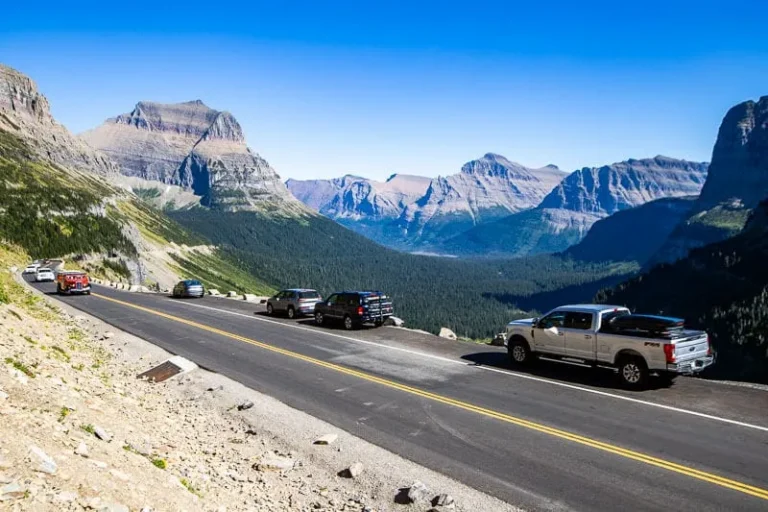
American Scenic Route Destinations: A Strategic Guide to Planning
The concept of the “scenic route” in the United States is often misconstrued as a static feature of the landscape, a simple byproduct of favorable topography. In reality, these routes are active, curated corridors of movement. They exist at the precise intersection of civil engineering, historical preservation, and economic policy. To navigate these paths effectively is to participate in a highly organized system of transit that prioritizes the experience of movement over the speed of arrival. This requires a fundamental recalibration of the traveler’s mindset: moving away from the efficiency-driven logic of the interstate highway system toward a more nuanced, deliberate interaction with the geography of the continent.
The contemporary traveler faces an overwhelming glut of information, much of it curated by algorithms that prioritize visual spectacle over structural integrity or operational feasibility. This digital noise tends to flatten the American landscape, reducing diverse regional identities into a series of predictable, “Instagram-worthy” nodes. By treating every destination as a discrete check-box, travelers often miss the connective tissue—the subtle shifts in vernacular architecture, the transition of ecological zones, and the historical layers that define the true character of the American transit corridor. True understanding requires a deeper engagement with the systems that sustain these routes.
This analysis aims to move past the superficiality of typical travel literature. It seeks to provide a definitive, structural reference for those who approach travel as an intellectual and logistical undertaking. We will examine the forces that define the American transit landscape, from the federal legislation that designates scenic byways to the local maintenance regimes that keep them viable. By providing a rigorous framework for evaluating and executing long-distance transit, we enable the reader to transform a mere drive into a profound engagement with the American expanse.
Understanding “American Scenic Route Destinations”
A sophisticated investigation into American scenic route destinations reveals that these corridors are not merely “beautiful roads.” They are complex logistical systems designed to guide, inform, and manage the flow of visitors through ecologically sensitive or historically significant regions. A common misunderstanding is that these routes are natural features; on the contrary, they are entirely anthropogenic, created by deliberate policy decisions and maintained by continuous human intervention. The designation of a route as “scenic” is a regulatory status that triggers a suite of management requirements—from strict zoning along the corridor to the maintenance of specific pull-off infrastructure.
Oversimplification in this sector leads to the “photograph-first” failure mode. A traveler who assumes that the American scenic route destinations exist solely for visual consumption often ignores the logistical requirements of the route itself—the limitations of fuel, the constraints of seasonal weather patterns, and the capacity of the infrastructure to handle high volumes of traffic. This misalignment between expectation and operational reality is a primary cause of travel failure. The sophisticated traveler recognizes that these corridors require a high degree of “operational alignment”—ensuring the vehicle, the driver’s stamina, and the time budget are all calibrated to the specific challenges of the terrain.
Furthermore, these routes serve as vital arteries for regional economies, yet they are fragile. Managing American Scenic Route destinations requires a delicate balance between encouraging visitation and preserving the very qualities that make the corridor desirable. The traveler who treats these routes as a consumable commodity risks contributing to their degradation. A more refined approach involves recognizing one’s own role within this ecosystem, prioritizing routes that demonstrate sustainable management, and opting for off-peak traversal times to minimize the impact on both the environment and the local infrastructure.
Historical Evolution: From Pioneer Trails to Federal Byways
The history of the American road is a history of adaptation. Long before the National Scenic Byways Program was codified in 1991, the routes now labeled as iconic were forged by necessity—migration, trade, and exploration. The transition from the rugged paths of the frontier to the refined scenic routes of today represents a remarkable shift in national values. We moved from viewing the land as an obstacle to be conquered to viewing it as a resource to be protected and experienced.

The federalization of these routes in the late 20th century was an attempt to provide a uniform framework for their protection. It was a reaction to the standardized, industrial transit model of the interstate system, which prioritized speed and efficiency at the expense of regional distinctiveness. The scenic byway designation essentially allowed certain corridors to opt out of the “expressway” model, re-centering the focus on the traveler’s experience of the environment. Understanding this history is crucial because it informs why certain routes are maintained with high levels of investment while others are allowed to return to a more primitive state.
Conceptual Frameworks and Mental Models
To organize the complexity of transiting these routes, the following frameworks provide the necessary structure:
-
The “Resource-Staging” Framework: Every scenic route has a “staging cadence”—the rate at which one must stop to refuel, restock, or rest based on the terrain’s difficulty. A successful drive is not about the stops one makes, but about the efficiency with which those stops are integrated into the transit flow.
-
The “Complexity-Multiplier”: Map the route’s difficulty against your vehicle’s performance profile. A high-altitude pass in a low-torque vehicle creates a complexity multiplier that requires a significant increase in planning time and risk management.
-
The “Operational Buffer”: The scenic route is inherently subject to higher volatility than the interstate. The “buffer” is not just extra time; it is a dedicated resource reserve—fuel, water, food, and communication capability—held back for the inevitable disruptions.
-
The “Transit-to-Engagement” Ratio: Track the percentage of your trip spent in transit vs. time spent engaged with the environment. A successful transit plan ensures this ratio remains balanced, preventing “windshield fatigue.”
Taxonomy of Transit Variations and Operational Trade-offs
| Route Type | Engineering Focus | Primary Driver | Risk Factor |
| Alpine/Mountain | Grade Management | Elevation Gain | Altitude; Weather |
| Coastal/Barrier | Erosion Control | Tidal Influence | Road washouts; Traffic |
| Arid/High-Desert | Heat Mitigation | Isolation | Vehicle stress; Supply-gap |
| River Corridor | Flood Management | Curvature | Falling rock; Wildlife |
Realistic Decision Logic
When evaluating American scenic route destinations, apply the “Constraint-Performance” test. If a route features high-complexity terrain (e.g., steep grades or sharp curves) and your vehicle is unsuited for that performance, the route’s status as “scenic” is secondary to its status as a “high-risk infrastructure.” The professional decision is always to prioritize operational compatibility over scenic allure.
Operational Scenarios: Navigating Topographic Friction
Scenario 1: The “Descent-Friction” Failure
A driver descends a 12% grade on a high-elevation scenic route using only the brake pedal rather than lower gears.
-
The Failure: Brake fade leads to a complete loss of stopping power.
-
The Second-Order Effect: A minor mechanical failure at high altitude becomes a critical safety incident, triggering a cascading need for emergency services in a remote area.
-
The Correction: Professional drivers utilize the vehicle’s powertrain for speed control, preserving the friction-based braking system for emergency use.
Scenario 2: The “Supply-Gap” Stagnation
A traveler plans an arid-desert route based on a digital map that does not account for the decommissioning of a remote fuel station.
-
The Failure: Running out of fuel in an area with zero cellular service.
-
The Second-Order Effect: A multi-hour, high-stress wait for assistance that could have been mitigated by a simple “reserve-only” refueling strategy.
Planning, Cost, and Resource Dynamics
| Resource Variable | Direct Cost Factor | Indirect Cost Factor |
| Fuel Burn | Moderate | High (Grade-dependent variance) |
| Vehicle Wear | Moderate | High (Brakes/Tires/Cooling) |
| Time-Budget | High | Extreme (Unpredictable transit speed) |
| Contingency | Low (Reserve) | High (Support/Emergency recovery) |
Managing these routes requires the understanding that the cost of transit is not static. It is a dynamic variable that scales with the complexity of the topography.
Strategic Support Systems and Defensive Documentation
-
The Master Transit Ledger: A digitized, offline-accessible document containing all logistical data for the route—fuel stations, service intervals, weather station links, and emergency contacts.
-
Topographic Mapping: Relying solely on GPS is a systemic failure. Maintain high-resolution physical topographic maps of the route.
-
Vehicle Health Baseline: A professional inspection targeting the braking, cooling, and tire systems must occur no more than 30 days before initiating any high-complexity transit.
-
The “Expedition-Kit”: A self-contained kit for 48 hours of autonomous living—water, rations, basic mechanical tools, and high-visibility signaling devices.
-
Community-Intelligence: Tap into specialized regional networks (e.g., local trucking forums, park-specific volunteer groups) to understand current infrastructure conditions that digital tools miss.
The Risk Landscape: Compounding Liabilities
-
Environmental Compounding: Weather events are never isolated.
-
Cognitive Failure: Fatigue is the primary hazard on long, scenic transit. The “trance-like” state induced by long stretches of scenic driving is a precursor to accidents.
-
Supply Chain Dependency: The transit network is a chain. A break in that chain—a closed gas station, a washed-out road—shifts the burden of transit to the traveler.
Governance, Maintenance, and Long-Term Adaptation
-
The Transit Audit: Post-transit review of fuel efficiency and mechanical performance. If a route consumes significantly more resources than planned, investigate why (e.g., road condition vs. driving style).
-
Adjustment Triggers: If a route shows a recurring pattern of infrastructure failure (e.g., repeated closures), remove it from the viable list for future planning.
-
Layered Checklist: Maintain a modular pre-departure protocol: Baseline (all trips) + High-Altitude + Extreme-Heat + Remote-Area.
Measurement, Tracking, and Evaluation
-
Leading Indicator: “Scheduled buffer percentage.” A lower buffer suggests higher risk; an excessively high buffer suggests poor planning.
-
Lagging Indicator: “Actual-to-planned speed ratio.” Significant variance indicates an inaccurate mental model of the terrain.
-
Documentation Example 1: The Transit Log – A structured log tracking mileage, fuel efficiency, and road condition observations.
-
Documentation Example 2: The Infrastructure Registry – A list of reliable service points verified by personal experience, rather than potentially outdated digital sources.
Deconstructing Industrial Misconceptions
-
Myth: “Scenic routes are safer than highways.” Correction: Often, the opposite is true. Scenic routes lack the standardized safety margins of the interstate and are more susceptible to geologic instability.
-
Myth: “Digital mapping is real-time.” Correction: Digital maps are frequently behind the reality of infrastructure failure, especially in remote regions.
-
Myth: “All scenic routes are equal.” Correction: They range from highly maintained parkways to crumbling, high-risk exploration routes. The designation is not a guarantee of road quality.
-
Myth: “Bigger vehicles are better for scenic driving.” Correction: Smaller, high-maneuverability vehicles are often better suited for the tight geometry and parking constraints of scenic corridors.
-
Myth: “I can decide my stops as I go.” Correction: In high-congestion regions, the best infrastructure and accommodations are reserved well in advance. Spontaneity is a luxury of low-demand periods.
Conclusion: The Synthesis of Strategic Judgments
The pursuit of American scenic route destinations is, in essence, an exploration of the managed landscape. It requires the traveler to adopt a framework of operational discipline, acknowledging that the beauty of the transit is sustained by a delicate and often strained network of human engineering. Success is not merely arriving at the destination; it is the mastery of the journey itself—managing the vehicle, the route, and one’s own physical and mental readiness for the transit. There is no singular “scenic route”; there is only the route that is correctly planned, appropriately equipped, and expertly navigated.