Top Coastal Drives in America: The Definitive 2026 Editorial Guide
The American coastline is a complex geological and cultural boundary, spanning thousands of miles of ecological transition zones where the continental shelf meets the varying temperaments of the Atlantic, Pacific, and Gulf waters. To engage with the concept of a coastal drive is to navigate the physical manifestation of the nation’s edge—a journey through maritime history, tectonic plate movement, and the persistent human effort to maintain infrastructure against the relentless force of erosion. These routes are not merely scenic diversions; they are technical corridors that provide a tactile understanding of the continent’s geography.
In the modern travel landscape, these coastal arteries have evolved into high-stakes environments where the traveler must balance aesthetic appreciation with a sophisticated understanding of environmental variables. The Pacific Coast, with its vertical relief and seismic instability, offers a fundamentally different logistical challenge than the low-lying, hurricane-prone barrier islands of the Atlantic or the mangrove-fringed limestone of the Florida Keys. Each region demands a specific mental approach, from the forensic timing required to avoid marine layer fog to the calculated awareness of seasonal high tides and bridge maintenance cycles.
As we look toward the latter half of this decade, the experience of the coastal drive is increasingly defined by the tension between accessibility and preservation. What were once quiet, local bypasses have become globally recognized assets, subjected to systemic pressures from high tourism density and climate-induced volatility. Navigating the top coastal drives in America today requires a shift from passive observation to active, informed participation. This involves a rigorous analysis of seasonal windows, regional infrastructure integrity, and the nuanced trade-offs between the iconic “classic” routes and the increasingly fragile “wild” bypasses.
Understanding “top coastal drives in America.”
To define the top coastal drives in America is to look past the surface-level beauty of a sunset and into the functional reality of the corridor. A common misunderstanding in modern travel editorial is the conflation of “scenic” with “accessible.” In truth, the most profound coastal drives are often the most difficult to navigate, requiring a tolerance for narrow shoulders, steep grades, and unpredictable weather patterns. To oversimplify these routes as mere “photo opportunities” ignores the biological and geological richness that defines them—such as the transition from redwood forests to kelp beds in California, or the delicate marshland ecosystems of the Carolina Outer Banks.
There is also a significant risk in the “oversaturation” of certain iconic routes. Algorithmic bias often funnels travelers into a handful of high-density corridors like Big Sur or the Overseas Highway, creating a feedback loop that degrades the integrity of the experience for everyone involved. A sophisticated analysis recognizes that a “top” drive is characterized by its “narrative density”—the amount of historical, ecological, and cultural information it provides per mile. This could include the industrial history of the Oregon coast’s fishing villages or the maritime lore embedded in the lighthouses of New England.
Furthermore, the “top” designation must account for the mechanical and psychological demands placed on the traveler. A coastal drive is an exercise in “edge-of-map” navigation where cell service is often interrupted by topography, and the proximity to salt spray demands higher vehicle maintenance. Understanding these drives as high-participation environments is essential. It requires a mental shift from a focus on the destination to an analysis of the “interstitial space”—the miles where the land actively negotiates its boundary with the sea.
The Evolution of Coastal Infrastructure and Maritime Access
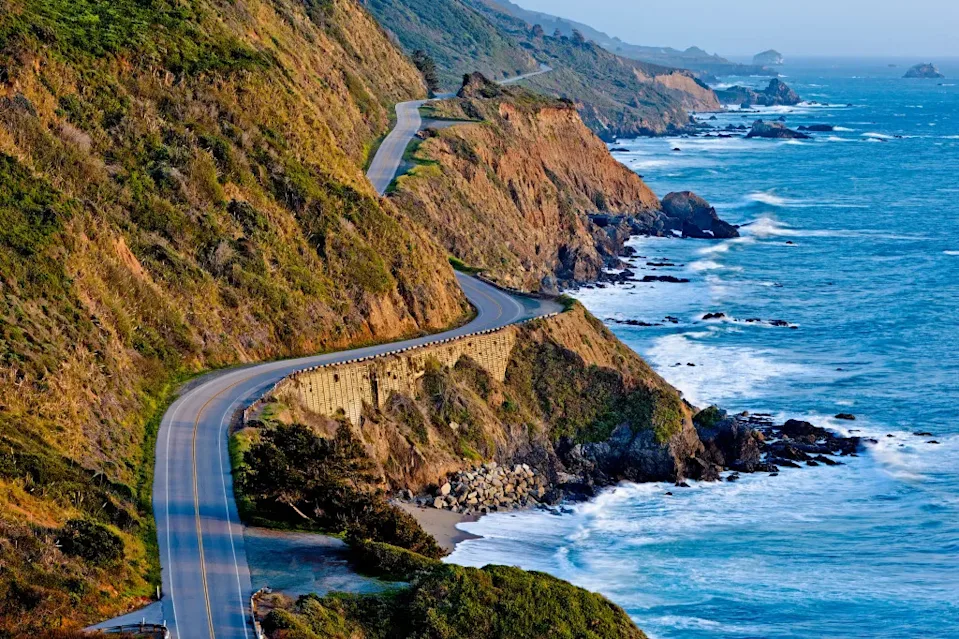
The history of American coastal roads is a transition from utility to leisure. In the 18th and 19th centuries, coastal access was primarily a matter of commerce; roads were rough trails used to move goods from inland farms to seaside ports. The concept of the “scenic drive” only began to take shape with the “Good Roads Movement” of the early 20th century. Engineering marvels like the Pacific Coast Highway (PCH), started in the 1920s, were not merely transport routes but political and social statements about the accessibility of the American wilderness.
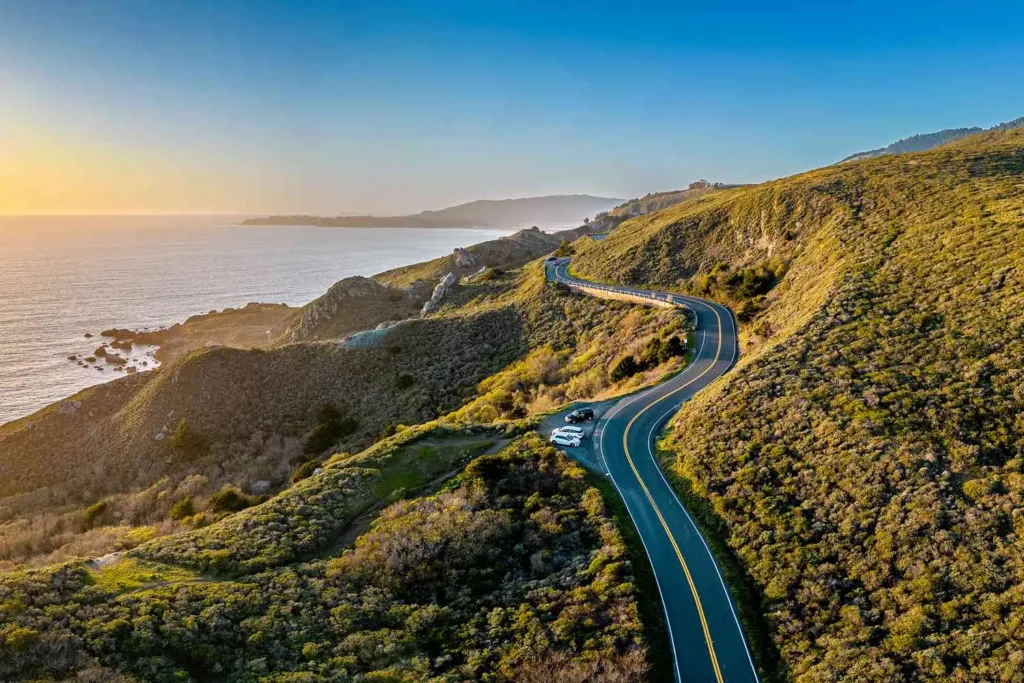
The post-WWII era saw the codification of these routes as national treasures, with the establishment of the National Scenic Byways Program. However, the 21st century has introduced a defensive phase in this evolution. Engineers are now tasked not just with expansion, but with “managed retreat” and climate adaptation. Bridges are being raised, and seawalls are being reinforced. The very nature of the coastal drive is shifting from a static experience to a dynamic one, where the road itself is often in a state of flux due to the shifting sands and rising sea levels that define the American littoral.
Conceptual Frameworks for Coastal Navigation
To evaluate a coastal route beyond its visual appeal, one must apply specific cognitive models:
1. The Bathymetric Interface Model
This framework assesses how the underwater topography influences the surface-level drive. On the West Coast, the deep-water drop-off results in cold-water upwelling, which creates the thick marine layer (fog) that can suddenly neutralize the “scenic” value of the drive. On the East Coast, the shallow continental shelf results in warmer water and higher humidity, leading to hazy light quality.
-
The Model: Use water temperature and depth data to predict visibility and light quality.
-
The Limit: Cannot account for localized wind patterns that may clear fog in micro-pockets.
2. The Infrastructure-Erosion Tension
This model analyzes the road as a temporary structure on a moving landscape. Every coastal drive is essentially a “war” between civil engineering and the ocean.
-
The Model: Assess the age and maintenance level of sea walls and bridges to gauge the long-term viability of the route.
-
The Limit: Sudden seismic or storm events can override historical maintenance data.
3. The Salt-Spray Corridor Analysis
This framework focuses on the physical impact of the environment on the equipment and the observer.
-
The Model: Calculate the “Corrosion Index” based on the proximity of the road to the surf line and the frequency of onshore winds.
-
The Limit: Variable in sheltered bay areas vs. exposed headlands.
Categories of Coastal Corridors and Comparative Dynamics
America’s coastal drives can be categorized by their dominant geomorphology and the logistical demands they impose.
| Category | Typical Example | Dominant Feature | Strategic Trade-off |
| Pacific Edge/Vertical | Hwy 1, Big Sur, CA | Sheer cliffs; dramatic elevation | High landslide risk; narrow lanes |
| Barrier Island/Low-lying | Outer Banks, NC | Shifting dunes; horizontal vastness | Vulnerable to washouts; limited detours |
| Maritime Forest/Archipelago | Acadia Loop, ME | Granite crags; dense pine canopy | Short seasonal window; high tourist density |
| Tropical/Coral Limestone | Overseas Highway, FL | Azure horizons; bridge-heavy | High humidity; extreme hurricane risk |
| Northwest Estuary/Rugged | Hwy 101, OR/WA | Stack rocks; old-growth timber | Frequent rain; limited visibility |
Decision Logic: The “Primary Value” Factor
A traveler must choose between “Topographic Drama” (West Coast) and “Historical/Cultural Texture” (East Coast). The former offers a sense of vast, prehistoric isolation, while the latter offers a dense network of maritime history and walkable coastal villages.
Operational Scenarios: Navigating Environmental Variables
Scenario 1: The “Marine Layer” Neutralization (California)
A traveler plans a sunrise drive along the PCH in July.
-
The Context: The “June Gloom” often persists into July. High inland heat sucks cold ocean air toward the cliffs.
-
Failure Mode: The driver arrives at the Bixby Bridge to find zero visibility.
-
The Strategic Fix: Wait until the “burn-off” period between 11:00 AM and 2:00 PM. High noon on the coast is often more scenic than sunrise due to the clarity of the water’s color under a high sun.
Scenario 2: The “King Tide” Overwash (North Carolina)
Driving the NC-12 through the Outer Banks during a full moon.
-
The Context: King tides combined with onshore winds can push the Atlantic across the roadway even without a storm.
-
Failure Mode: A sedan becomes trapped in “salt-slush” (sand and saltwater), causing immediate undercarriage corrosion.
-
The Strategic Fix: Monitor the tide charts as rigorously as the weather forecast. High-clearance vehicles are a necessity, not a luxury.
Planning, Economics, and Resource Management
Coastal travel is governed by “Seasonal Premiums” and “Infrastructure Surcharges.”
| Resource | Low-Intensity Route (e.g., MS Gulf Coast) | High-Intensity Route (e.g., Hana Highway, HI) |
| Fuel Strategy | Ubiquitous access | Last fuel in Paia; 200% price premium |
| Accommodation | Standard lodging | Boutique B&Bs; 6-month booking |
| Vehicle Prep | Standard maintenance | Salt-resistant wax; brake check for hills |
| Time Buffer | 10% extra for traffic | 40% extra for bridge closures/one-lane waits |
Opportunity Cost: The “Slower” Mile
One must account for the “Visual Friction” of coastal driving. A mile on a coastal cliff takes 3-4 times longer to navigate than a mile on an interstate, not just because of the curves, but because of the cognitive load of processing the landscape.
Strategies and Defensive Support Systems
To ensure the integrity of the drive, the traveler should utilize these systems:
-
NOAA Marine Forecasts: Do not rely on “City” weather. Use marine forecasts to understand wave height and wind direction, which dictate salt spray levels.
-
Tide-Table Integration: Essential for barrier island routes where the road may be at or below sea level during storm surges.
-
Topographic Mapping: Use physical maps to identify “escape routes” inland, as coastal roads are often “singular exit” corridors.
-
Polarized Optics: High-quality polarized sunglasses are a technical tool, essential for cutting through ocean glare and seeing through the water’s surface to identify reefs or shoals.
-
Corrosion Mitigation: A high-pressure undercarriage wash within 24 hours of completing a coastal drive is the only way to protect the vehicle’s long-term value.
The Risk Landscape: Compounding Coastal Liabilities
Coastal driving involves a taxonomy of risks that are often invisible to the casual traveler.
-
Geological Instability: In areas like Big Sur or the Oregon Coast, the land is literally sliding into the sea. Heavy rains weeks prior can lead to “delayed landslides” on a sunny day.
-
The “Looky-loo” Hazard: Driver distraction is the leading cause of accidents on coastal roads. The desire to look at the whale breech or the sunset leads to “lane drift” on narrow, shoulder-less curves.
-
Micro-Climatic Exposure: Hyper-local weather can create “slick-spots” where sea spray mixes with road oil, creating a surface as slippery as ice on a $70^{\circ}F$ day.
Governance, Maintenance, and Long-Term Adaptation
The management of coastal roads is an ongoing cycle of review and adjustment.
-
Monitoring Triggers: If a route experiences more than three washouts in a single decade, it often moves into a “managed retreat” phase, where the road is moved inland or replaced with a bridge.
-
User Governance: Many “top” routes now require timed-entry permits (e.g., Cadillac Mountain in Acadia). This is a necessary governance tool to prevent the “Tragedy of the Commons,” where too many visitors destroy the resource they came to see.
-
Adaptive Checklist: A traveler’s pre-drive audit should include checking the “DOT Coastal Camera” feeds to verify real-time conditions rather than relying on 12-hour-old forecasts.
Measurement, Tracking, and Experience Evaluation
How do we quantify a “top” coastal experience?
-
Leading Indicators: Light quality (measured by the “Golden Hour” duration); low traffic density; high visibility (measured in miles).
-
Lagging Indicators: Vehicle maintenance costs post-trip; photos captured; “Seclusion Index” (time spent without another vehicle in view).
-
Documentation: Keeping a “Maritime Log” that notes specific wildlife sightings (e.g., sea otters, bald eagles) and changes in water color provides a qualitative record that simple photos cannot capture.
Common Misconceptions and Oversimplifications
-
“The Pacific is always blue.” Correction: Without the right sun angle and polarized lenses, the Pacific often appears slate-grey or silver due to glare.
-
“Summer is the best time for New England coastal drives.” Correction: Late September offers “Dry Air Clarity” and the absence of the summer humidity haze, plus lower tourist numbers.
-
“Coastal roads are the same as highways.” Correction: Coastal roads are “Living Infrastructures” that change hourly with the tide and wind.
-
“I can drive the whole California coast in three days.” Correction: To actually experience the transition of the 800-mile coast, a minimum of seven to ten days is required to account for the slow-speed nature of the terrain.
Ethical and Practical Considerations
There is an inherent ethical tension in coastal travel. These roads often pass through fragile ecosystems and small, isolated communities. The “editorial” traveler practices “Impact-Zero” driving: staying on paved surfaces to avoid dune erosion, respecting local “no-parking” zones that preserve emergency access, and understanding that their presence is a privilege in a sensitive biological zone. In 2026, the best coastal traveler is a “Quiet Observer”—one who seeks to understand the edge of the world without leaving a footprint upon it.
Conclusion
The top coastal drives in America offer a unique window into the geological and cultural soul of the continent. They are not merely paths of transit but sites of perpetual negotiation between the terrestrial and the maritime. To drive these routes with success is to balance the awe of the infinite horizon with the granular details of tide charts, brake temperatures, and light quality. By shifting our perspective from the “destination” to the “boundary,” we discover that the true value of the coastal road lies in its ability to remind us of the power, beauty, and fundamental instability of the world’s edge.