Luxury SUV Rentals USA: The Definitive 2026 Editorial Guide
The convergence of utility and opulence in the American automotive market has reached a definitive zenith in the 2020s. For the discerning traveler or executive, the choice of a vehicle is no longer a mere logistical footnote; it is a fundamental component of a broader strategic plan for mobility. The luxury Sports Utility Vehicle (SUV) occupies a unique niche in this landscape, offering a synthesis of high-occupancy capacity, all-weather capability, and the refined interior appointments previously reserved for flagship sedans. As the American landscape varies from the high-altitude winters of the Rockies to the sun-drenched coastal corridors of Florida, the demand for high-end versatility has never been more acute.
Navigating the ecosystem of premium vehicle procurement requires more than a simple transaction at an airport counter. It demands an understanding of the subtle gradations between traditional fleet operators and the burgeoning peer-to-peer luxury marketplaces that have redefined the availability of specific marques. In 2026, the marketplace is characterized by a “service-first” philosophy where the vehicle itself is often secondary to the “invisible logistics” surrounding its delivery, maintenance, and insurance. This transition from a product-based model to an experience-based model has introduced new layers of complexity for the consumer, particularly regarding contract transparency and the verification of mechanical provenance.
Achieving a successful rental outcome involves a forensic analysis of one’s specific requirements: the necessary seating configurations for multigenerational travel, the cargo-to-passenger ratio for outdoor pursuits, and the technological integration required for a mobile office. This article serves as a definitive pillar for those seeking to master the nuances of the high-end SUV market in the United States. We move beyond superficial brand comparisons to examine the systemic frameworks, economic trade-offs, and risk-mitigation strategies that define the modern premium rental experience.
Understanding “luxury SUV rentals US.”
To engage with the market for luxury SUV rentals usa is to navigate a landscape where terminology is frequently used to mask varying levels of service quality. The term “luxury” is often applied as a generic marketing label for any vehicle that exceeds the base trim of a standard manufacturer. However, for the editorial-grade traveler, true luxury is defined by the intersection of three pillars: mechanical excellence, cabin provenance, and concierge-level support. Understanding this distinction is the first step in avoiding the “premium-light” trap—where a renter pays a luxury rate for a vehicle that lacks the advanced driver-assistance systems (ADAS), sound-insulated glass, or premium materials found in genuine flagship models.
Oversimplification in this sector often centers on the “Or Similar” clause. Traditional rental agencies operate on a class-based system, meaning a reservation for a specific German marque might be fulfilled with a domestic alternative that, while similar in size, lacks the same prestige or specific performance metrics. The risk of this ambiguity is high for those traveling for professional reasons or high-profile events where specific brand alignment is a non-verbal component of the engagement.
Furthermore, the geographical context of the United States dictates a multi-perspective approach to selection. A luxury SUV that excels on the smooth, high-speed toll roads of Texas may be ill-suited for the narrow, winding corridors of New England or the off-road requirements of the Southwest. Managing these variables requires a “Total Environment Audit,” assessing not just the vehicle, but the specific infrastructure and climate of the destination. A sophisticated renter understands that “luxury” is not a static attribute, but a contextual one.
Contextual Background: The Evolution of the Premium Fleet
The history of the luxury SUV in the United States is a narrative of convergence. Initially, the SUV was a utilitarian tool—built on a truck chassis for durability and off-road capability. The 1990s introduced the “Gentleman’s SUV,” where leather interiors and high-end audio systems were grafted onto these rugged frames. By the 2010s, the “Unibody Revolution” allowed for the creation of SUVs that drove like sport sedans, leading to a surge in demand from the executive class who valued the command seating position without the agricultural ride quality of their predecessors.
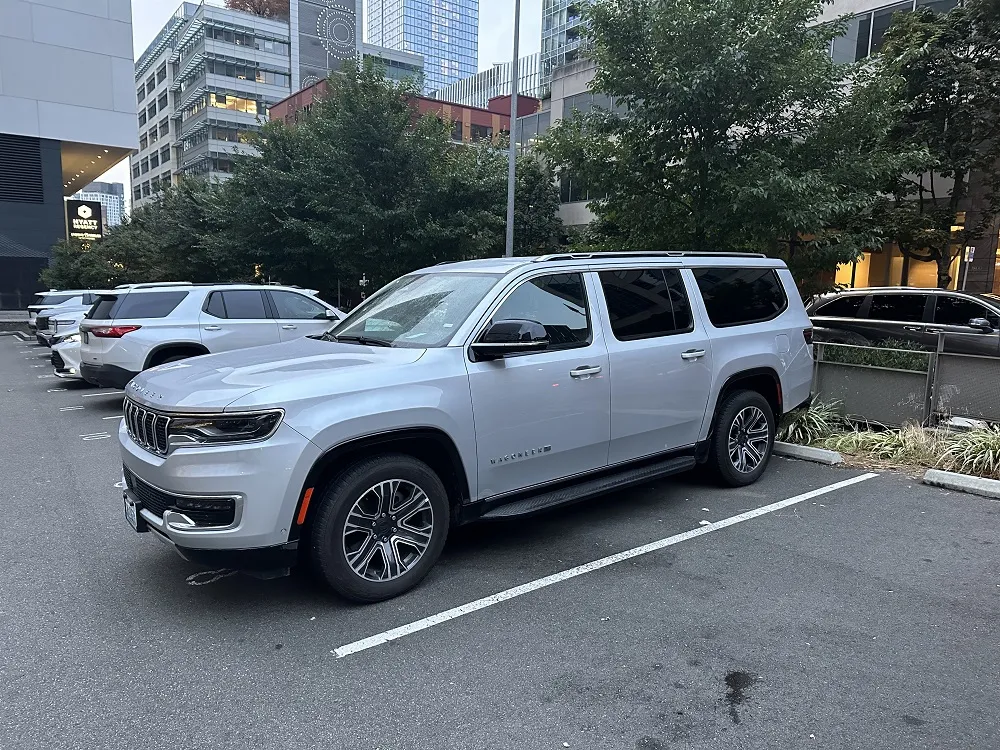
In the mid-2020s, the market has undergone a secondary transformation driven by electrification and digitization. The “Luxury SUV” now encompasses ultra-quiet electric vehicles (EVs) with zero tailpipe emissions, making them a preferred choice for sustainable corporate travel in urban centers like San Francisco or Seattle. Simultaneously, the rise of specialized boutique rental agencies and P2P platforms has broken the monopoly of the “Big Three” rental firms. This fragmentation has created a “High-End Niche” market where a renter can specify the exact year, model, and interior color of a vehicle, a level of precision that was historically unavailable.
Conceptual Frameworks for Vehicle Procurement
To move beyond impulsive decision-making, we apply specific mental models that prioritize functional integrity over aesthetic appeal.
1. The Cargo-Occupant Parity (COP) Model
In a luxury context, “full capacity” is a misnomer. If a three-row SUV is filled to its maximum seating capacity, the remaining cargo space is often insufficient for even a single set of golf clubs or a full-sized suitcase.
-
The Model: Always rent one size class larger than the passenger count suggests.
-
The Goal: Ensure that the “luxury” of space is maintained for every passenger, avoiding the “clutter-induced fatigue” of a packed cabin.
2. The Chassis-Environment Alignment
This framework matches the mechanical foundation of the vehicle to the topography.
-
Body-on-Frame: Reserved for towing, heavy snow, or actual off-road ingress (e.g., Escalade, Navigator).
-
Unibody/Crossover: Optimized for high-speed interstate travel, urban parking, and passenger comfort (e.g., Cayenne, GLE, X5).
-
The Limit: Using a body-on-frame vehicle for urban commuting is a failure in efficiency, resulting in poor maneuverability and excessive fuel consumption.
3. The Digital Sovereignty Check
In 2026, the SUV is a mobile node in the traveler’s digital ecosystem.
-
The Model: Evaluate the vehicle’s “Connectivity Stack.” Does it support wireless integration of your specific OS? Does it offer redundant navigation for “dead zones” in national parks?
-
The Limit: A luxurious interior is neutralized by a proprietary infotainment system that is difficult to navigate or lacks real-time traffic data.
Taxonomy of Luxury SUV Categories and Variations
The American market offers several distinct sub-categories of luxury SUVs, each with specific performance trade-offs.
| Category | Representative Models | Ideal Use Case | Strategic Trade-off |
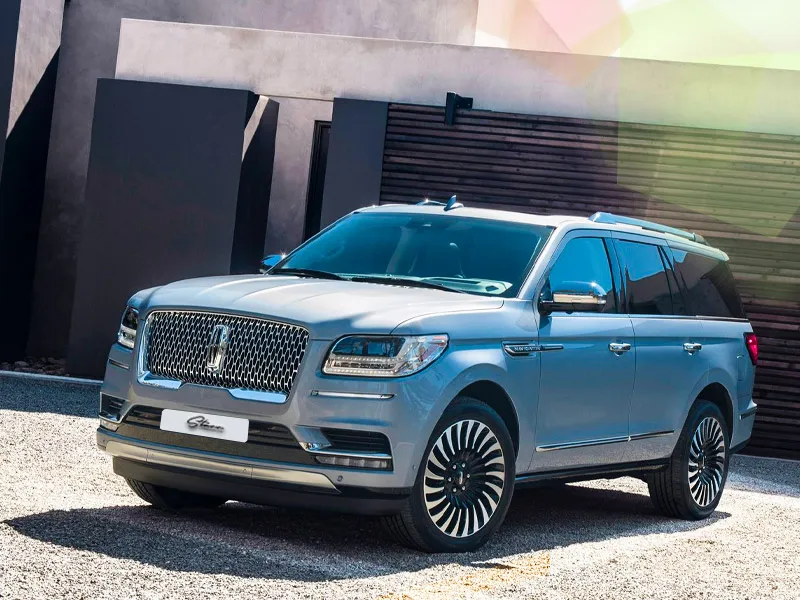
| The Full-Size Icon | Cadillac Escalade ESV, Lincoln Navigator L | Multigenerational travel; Airport transfers | Difficult urban parking; High fuel consumption |
| The Performance Elite | Porsche Cayenne, BMW X5 M, Range Rover Sport | High-speed long-distance travel; Mountain passes | Firmer ride quality; Limited cargo height |
| The Urban Electric | Rivian R1S, Tesla Model X, Mercedes EQS SUV | Sustainable city travel; Tech-forward hubs | Requires charging infrastructure planning |
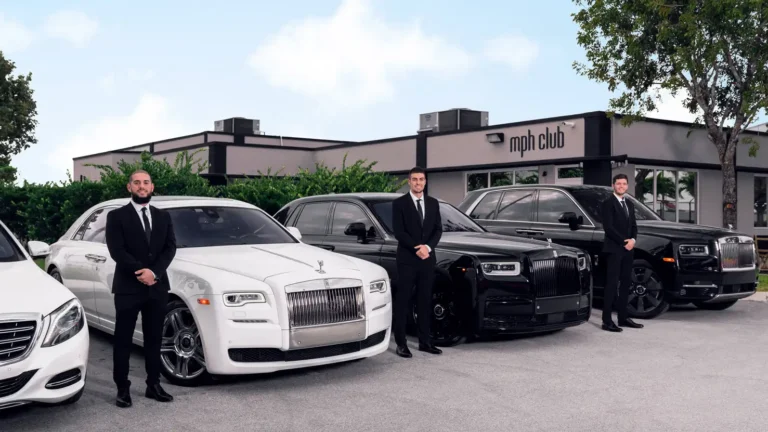
| The Ultra-Luxury | Bentley Bentayga, Rolls-Royce Cullinan | High-profile events, red carpet, boutique tours | Extreme daily rates; High security deposits |
| The Versatile Mid-Size | Audi Q7, Volvo XC90 | Family safety focus; Understated luxury | The third row is often for children only |
| The Rugged Luxury | Mercedes G-Class, Land Rover Defender | Remote cabin access; Statement driving | Boxy aerodynamics lead to higher wind noise |
Decision Logic: Power vs. Presence
If the journey involves the mountain passes of the Pacific Northwest, the turbocharged torque of the Performance Elite category is the mechanical priority. If the journey involves the wide-open boulevards of Las Vegas, the “road presence” of the Full-Size Icon category becomes the psychological priority.
Operational Scenarios: Decision Logic and Failure Modes
Scenario 1: The Winter Ski Expedition (Colorado)
A group of four adults with full ski gear rents a luxury mid-size SUV.
-
Failure Mode: The mid-size SUV lacks a roof rack, and the interior space is consumed by luggage, forcing the skis to be placed between the passengers. This creates a safety hazard and destroys the luxury experience.
-
The Strategic Fix: Opt for a long-wheelbase (LWB) full-size SUV with factory-installed roof rails. Verify that the rental agency provides winter-rated tires, as “All-Season” tires are often insufficient for the Eisenhower Tunnel pass.
Scenario 2: The Multi-City Corporate Tour (Northeast Corridor)
An executive team travels from DC to NYC to Boston.
-
Decision Point: Should they rent a large SUV or a high-end EV?
-
Failure Mode: Renting a Full-Size Icon for NYC. The difficulty of finding garages that can accommodate the vehicle’s height and length leads to wasted hours and missed meetings.
-
The Strategic Fix: A Performance Elite or Urban Electric SUV provides the maneuverability needed for dense urban grids while maintaining the required prestige.
Economic Dynamics: Costs, Time, and Opportunity
The pricing of a luxury SUV rental is rarely transparent. Beyond the daily rate, several “hidden” costs must be factored into the budget.
| Expense Type | Estimated Daily Impact | Strategic Consideration |
| Base Daily Rate | $150 – $1,200 | Varies by marque and seasonal demand |
| Premium Fuel/Charging | $40 – $100 | Large SUVs have 25+ gallon tanks requiring 91+ octane |
| Excess Insurance | $30 – $70 | Standard credit card insurance often caps at $50,000 |
| Concierge/Delivery Fees | $50 – $250 | “At-your-door” delivery saves 2 hours of transit time |
| Over-mileage Penalties | $0.50 – $2.50 per mile | Critical for long-distance cross-state journeys |
The Opportunity Cost of the “Counter Line”
For the high-value traveler, the 45 minutes spent in a traditional rental queue is a loss of productivity. Luxury-specific providers solve this through “Curbside Handover” or “Remote Unlocking.” If an executive’s time is valued at $500/hour, paying a $100 delivery fee is a net gain.
Support Systems and Defensive Strategies
To ensure the integrity of the luxury SUV rentals usa experience, one should employ a suite of support systems.
-
Independent Excess Liability: For vehicles valued over $100,000 (G-Wagon, Cullinan), standard personal policies may have gaps. A standalone “High-Value Umbrella” policy for the duration of the rental is a necessary shield.
-
Telemetry Verification: When using a P2P platform, request a screenshot of the vehicle’s current health report (tire pressure, oil life) via the manufacturer’s app 24 hours before pickup.
-
Toll Management Integration: Ensure the vehicle is equipped with a multi-state transponder (E-ZPass/SunPass). Dealing with “pay-by-plate” invoices weeks later is an administrative burden that high-end agencies should handle for you.
-
Local Knowledge Buffers: In remote areas, verify the proximity of the manufacturer’s authorized service centers. If a Range Rover has a software glitch in rural Montana, the “recovery time” could be days rather than hours.
The Risk Landscape: Compounding Liabilities
The primary risks in luxury rentals are not just accidents, but “Status Impairments.”
-
The Diminution of Value Risk: If a high-end vehicle is involved in an accident, the rental agency may sue the renter for the “lost resale value” even if the repair is paid for. This is a common trap in ultra-luxury (Bentley/Rolls-Royce) contracts.
-
The “Cleaning” Ambiguity: Luxury vehicles have sensitive materials (Alcantara, open-pore wood). Using the wrong cleaning agent or allowing smoke/pet odors can result in “Reconditioning Fees” that reach into the thousands.
-
Mechanical Negligence: Many performance SUVs have specific operating requirements (e.g., warming up the engine). Failure to adhere to these can be tracked via the vehicle’s black box and used to invalidate insurance claims.
Governance: Long-Term Management of the Agreement
For rentals exceeding 14 days, a “Governance Cycle” must be established to maintain the asset and the contract.
-
Weekly Condition Audit: A 360-degree photo sweep of the vehicle every Sunday. This provides a timestamped trail that prevents “accumulated wear” disputes at the end of the month.
-
Fuel/Charging Reconciliation: Tracking receipts in real-time ensures that you aren’t overcharged for “refueling services” if the gauge is slightly below full upon return.
-
Communication Log: Any interaction with the agency regarding a warning light or a minor scratch should be documented via email, not just a phone call.
Measurement, Tracking, and Evaluation
A successful luxury rental should be evaluated using both Quantitative and Qualitative metrics.
-
The Efficiency Ratio: (Total Miles Driven) / (Total Time Spent in Transit). A low ratio in an urban setting suggests that the vehicle was too large for the environment.
-
The Friction Score: How many “unplanned” actions were required? (e.g., searching for a specific charger, calling the agency for help).
-
The Prestige Audit: Did the vehicle meet the specific social or professional requirements of the trip? This is a subjective but critical metric for luxury users.
Common Misconceptions and Oversimplifications
-
“All SUVs have 4WD.” Correction: Many luxury SUVs, especially in Florida or California, are RWD (Rear-Wheel Drive). Always verify “All-Wheel Drive” for mountain travel.
-
“My credit card covers everything.” Correction: Most cards exclude “exotic” or “luxury” vehicles over a certain MSRP (usually $50k or $75k).
-
“Full-size means more legroom.” Correction: In many cases, the “Full-Size” designation only adds cargo space behind the third row, not more legroom for the second row.
-
“EVs are faster to refuel.” Correction: While they are faster to “fill” if you have a home charger, “Fast Charging” on a road trip still takes 20-40 minutes compared to 5 minutes for gas.
-
“Rental agencies maintain their cars better than owners.” Correction: P2P owners often have a personal connection to the car and maintain it to a higher standard than a high-turnover fleet.
Ethical and Practical Considerations
In 2026, the “Ethical Footprint” of a luxury rental is a growing consideration. Driving a large, V8-powered SUV through an environmentally sensitive area like a National Park can be seen as “contextually insensitive.” Many high-end travelers are now opting for “Hybrid-Luxury” or “Full Electric” SUVs to align their travel with their personal or corporate ESG (Environmental, Social, and Governance) values.
Practically, the “Luxury SUV” is a target for theft and vandalism in certain urban areas. The sophisticated renter avoids leaving any items visible in the cabin—even a high-end water bottle or a charging cable—to mitigate the risk of “smash-and-grab” incidents that can derail a trip.
Synthesized Conclusion
The mastery of luxury SUV rentals usa is a study in the balance of power and precision. The American road provides a vast canvas for the capabilities of these vehicles, but the complexity of the rental market requires a disciplined, analytical approach to procurement. By applying the Cargo-Occupant Parity model, understanding the nuances of Diminution of Value, and selecting a vehicle that is mechanically aligned with the environment, the traveler ensures that their mobility remains an asset rather than a liability. In the final estimation, the “best” luxury SUV is the one that disappears into the background of a perfectly executed journey—providing the comfort, safety, and prestige required without the friction of logistical failure.