Luxury Desert Drives United States: A Strategic Guide to Arid Transit
The American desert, in the context of high-end automotive transit, presents a paradox of scale and vulnerability. Unlike temperate landscapes, which often provide a buffer of lush vegetation and abundant water, the arid regions of the American Southwest strip the transit experience to its elemental components: light, distance, and geology. To engage in these regions is to enter an environment where the margin for mechanical and human error is exceptionally thin. The pursuit of sophisticated, high-end experiences across these terrains is therefore not merely a leisure activity; it is a complex logistical operation that requires a meticulous calibration of vehicle performance, environmental awareness, and navigational readiness.
The aesthetic draw of these routes—the stark, mineralized beauty of the basin-and-range province, the dramatic shifts in light across the Mojave, or the architectural complexity of sandstone plateaus—often obscures the reality of the engineering challenges involved. These transit corridors are fragile. They are perpetually contested by shifting sands, extreme thermal gradients, and the limitations of aging infrastructure. For the modern driver, the challenge is to reconcile the desire for seamless, high-performance transit with the harsh, unforgiving reality of the desert’s physical environment.
Achieving a high-level engagement with these routes necessitates a departure from the “point-to-point” logic that dominates lowland transit. It requires an operational mindset—one that views the vehicle not merely as a carrier, but as a critical life-support system. This analysis serves as an analytical reference for the reader who demands more than the surface-level recommendations that populate mainstream media. We will deconstruct the logistics, risk profiles, and historical evolution of these routes, providing a framework for those who wish to traverse the desert with intelligence, precision, and respect for the environment.
Understanding “luxury desert drives united states.”
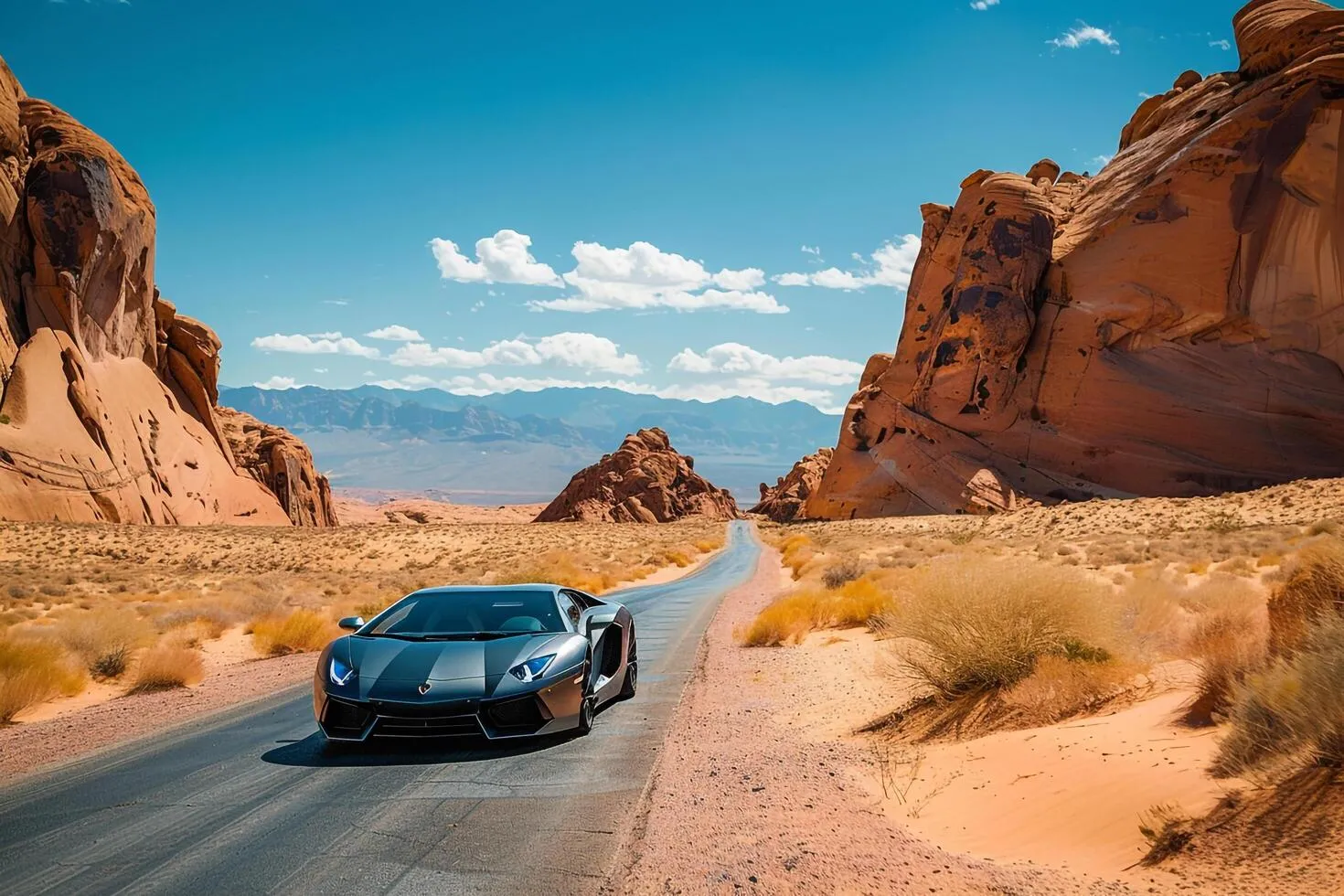
A rigorous investigation into the luxury desert drives united states reveals that the superlative “luxury” is fundamentally redefined by the desert environment. In the context of a sterile, high-heat terrain, luxury is not found in the superficial trapping of leather seats or high-fidelity audio; it is found in reliability, climate control, and the seamless management of external stressors. A common failure in public discourse is the mischaracterization of these routes as inherently “luxurious” simply because they feature scenic vistas. In reality, a drive through a remote, high-heat corridor in an under-prepared, consumer-grade vehicle is the antithesis of luxury—it is an exercise in vulnerability.
The danger in this oversimplification is the false sense of security it provides to the driver who lacks experience with arid-region logistics. When one considers the luxury desert drives united states, one must look beyond the aesthetic appeal of the route and analyze the underlying systems. Does the vehicle have an oversized cooling system? Is there a multi-layered communication redundancy? Has the route been vetted for seasonal hazards like sudden flash floods or extreme temperature spikes? These are the operational bedrock of a truly “luxurious” experience, as they insulate the occupant from the harsh, potentially life-threatening realities of the environment.
Furthermore, the search for the luxury desert drives the UnitedStatess must account for the infrastructure gap. Many of the most visually stunning routes traverse areas where the interval between reliable, high-tier service facilities can exceed one hundred miles. This distance creates an “operational gap” that requires the driver to possess a higher level of autonomy. The most effective approach is to view these drives not as fixed, passive experiences, but as active missions that require a high degree of pre-transit planning. To identify the best routes, one must prioritize those that offer a balance between isolation—the primary goal—and logistical support—the essential safety requirement.
Historical Context: From Mercantile Pathways to Modern Byways
The desert routes of the American West were, by and large, forged by necessity—paths of water, resources, and minerals. The Spanish explorers, the fur traders, and the transcontinental railway engineers all prioritized the same corridors that modern transit uses today. These were not the most beautiful routes; they were the most survivable. The evolution of these paths into the modern “scenic byway” model reflects a shift in American priorities, where the desert was recontextualized from an obstacle to be bypassed into a destination to be consumed.

However, the modern designation of a scenic route does not alter the underlying physics of the desert. The infrastructure—the asphalt, the signage, the drainage systems—is constantly at war with the arid climate. The maintenance regimes of these routes are among the most difficult in the country, hampered by the lack of local materials and the extreme thermal expansion and contraction that destroys pavement integrity. Understanding this history is essential, as it provides context for why certain stretches are immaculately maintained while others are in a state of perpetual, natural decay.
Conceptual Frameworks for High-Elevation Arid Logistics
To manage the complexities of desert transit, the following mental models provide a necessary foundation:
-
The “Thermal-Load” Equilibrium: The desert is a heat sink. A vehicle’s cooling system is not just handling engine combustion; it is handling a massive ambient thermal load. Every route must be evaluated through the lens of the vehicle’s “thermal ceiling”—the temperature at which the cooling system’s margin of safety begins to evaporate.
-
The “Isolation-Distance” Metric: Define transit in terms of “time-to-rescue.” If a vehicle failure occurs, how long is the realistic window for support? The higher the isolation, the higher the requirement for onboard self-sufficiency.
-
The “Hydrological-Risk” Framework: Treat water as an architectural feature of the desert. Even in the driest regions, the risk of flash flooding in canyons or washes is a constant, structural threat to transit integrity.
-
The “Fail-Safe” Principle: In an environment where the external climate is hostile, the vehicle’s interior cabin must serve as an absolute fail-safe. If the climate-control system fails, the drive must be aborted immediately.
Taxonomy of Transit Routes and Operational Trade-offs
| Route Type | Engineering Focus | Primary Driver | Risk Factor |
| Basin-Floor Parkway | Sand/Wind Mitigation | Speed/Distance | Heat; Flat-tire risk |
| Canyon Corridor | Flash-Flood Drainage | Geological View | Rockfall; Washouts |
| Plateau/Skyway | Grade Management | Panoramic Scale | Extreme exposure |
| Mountain-Transition | Elevation Change | Variable Climate | Rapid temp swing |
Realistic Decision Logic
When selecting among the luxury desert drives united states, apply the “Constraint-Performance” test. Does the vehicle’s thermal capacity match the ambient temperature of the route’s peak heat? If the answer is no, the experience will quickly degenerate from a “luxury drive” into a high-liability struggle against the environment.
Operational Scenarios: Navigating Topographic and Thermal Friction
Scenario 1: The “Cooling-Failure” Bottleneck
A vehicle traverses a high-basin route on a 115-degree afternoon. The primary cooling fan fails, and the engine begins to cycle into a “limp mode” to prevent catastrophic failure.
-
The Constraint: The vehicle is suddenly moving at 20 mph in an area where the average speed is 65 mph.
-
The Failure Mode: Blocking the only lane on a narrow corridor during a period where professional support is three hours away.
-
Second-Order Effect: The rapid rise of cabin temperatures, potentially leading to heat-related stress for the occupants.
Scenario 2: The “Flash-Flood” Encirclement
A driver enters a canyon corridor during a period of distant, convective thunderstorms.
-
The Constraint: The desert floor acts as a massive drainage basin; rain 50 miles away can trigger a wall of water within the canyon.
-
The Failure Mode: The road is severed by a flash flood, trapping the vehicle between two impassable points.
-
Second-Order Effect: The necessity for a coordinated, multi-agency search-and-rescue operation that is complicated by the hazardous weather.
Dynamics of Energy, Maintenance, and Opportunity Cost
The cost of desert transit is fundamentally higher than lowland mileage.
| Cost Variable | Lowland Impact | Desert Impact |
| Fuel Efficiency | Standard | -20–30% (Heat/Wind resistance) |
| Fluid Degradation | Standard | +100–200% (Thermal stress) |
| Rubber Longevity | Standard | Elevated (Extreme pavement temps) |
| Maintenance Cycle | Standard | 1.5x – 2x higher frequency |
The opportunity cost here is “Time-Density.” Desert transit requires more time for cooling, more time for inspection, and more time for the cautious driving that the terrain demands.
Strategic Support Systems and Defensive Documentation
-
The “Thermal-Baseline” Protocol: Before any desert transit, perform a complete inspection of all rubber hoses, fluid levels, and the integrity of the radiator cooling system.
-
The “Offline-Manifest”: In the desert, cellular signal is a luxury, not a right. Carry high-detail, printed topographic maps and a localized, offline-enabled digital GGPS
-
The “Life-Support-Kit”: Beyond standard first aid, include at least one gallon of water per person per day of potential delay, plus high-electrolyte replacement fluids and protective sun-barrier gear.
-
Static Communication: Relying on mobile signal is a systemic failure. Carry a dedicated, satellite-based communication system for emergency signaling.
-
Vehicle-Interior Management: Always carry a portable, battery-powered cooling fan or emergency shade screen to manage cabin heat in the event of an engine failure.
The Risk Landscape: Compounding Liabilities
-
Environmental Compounding: Weather is not a singular event. It is a set of conditions—heat, wind, and light—that combine to alter the road’s surface and the vehicle’s performance.
-
Geologic Instability: Unlike roads on flat plains, desert roads are built on geologic timescales where erosion is the constant driver.
-
Human-System Misalignment: The primary risk is the gap between the driver’s perception of the road’s difficulty and the environment’s physical reality. The most “luxurious” drives are often the ones where this gap is most dangerous.
Governance, Monitoring, and Long-Term Adaptation
-
The Post-Trip Audit: After every desert drive, inspect the vehicle’s cooling system and tire pressure. These are the “leading indicators” of the drive’s thermal stress.
-
Adjustment Triggers: If a drive consistently produces “high-temperature” warnings, re-evaluate the route selection or the equipment capacity. Adjust toward “lower-complexity” or “cooler-season” desert routes.
-
Layered Checklist: Your vehicle’s health checklist should be “Arid-Adaptive,” emphasizing cooling system integrity, fluid levels, and tire-side-wall condition.
Metrics, Documentation, and Qualitative Assessment
-
Leading Indicator: “Idle fuel consumption.” (Measures engine drag).
-
Lagging Indicator: “Cooling-system delta.” (The difference between the coolant and the ambient temperature).
-
Documentation Example 1: The Desert Log – Tracks engine temperatures alongside ambient conditions to identify “thermal-stress” segments.
-
Documentation Example 2: The Risk Registry – A living document of potential failure points for a route, updated after every drive based on observed road conditions.
Deconstructing Industrial Misconceptions
-
Myth: “All-wheel drive makes the desert safe.” Correction: AWD aids traction; it does nothing for braking or heat dissipation. It adds weight and mechanical complexity.
-
Myth: “High speed is the best way to keep an engine cool.” Correction: High speed increases friction and engine load, which generates more heat. Moderate, steady speed is the desert standard.
-
Myth: “The most famous drives are the most luxurious.” Correction: The most famous drives are often the most congested, and congestion is an operational hazard in high-heat terrain.
-
Myth: “Modern technology fixes the desert.” Correction: Physics remains unchanged. Heat is a physical reality that technology can mitigate but never override.
-
Myth: “I can stop anywhere to enjoy the view.” Correction: Desert roads have limited, designated pull-outs.
Conclusion: The Synthesis of Strategic Judgments
Engaging with luxury desert drives united states requires a fundamental respect for the landscape. These routes are not merely visual assets; they are complex, high-effort engineering systems that exist at the edge of geological possibility. By abandoning the consumerist approach to scenic transit and adopting an operational framework of stewardship and preparedness, the driver transforms the act of driving into a mastery of the desert.