Best Classic Car Rentals America: A Strategic Guide
The modern rental of a vintage automobile is an exercise in managed uncertainty. Unlike the commoditized rental market, where a late-model sedan is an interchangeable appliance governed by predictable maintenance cycles, the classic car is an analog machine operating in a digital world. The appeal of these vehicles—the raw tactile feedback of a manual steering rack, the unmediated exhaust note, the specific aesthetic of a mid-century chassis—is precisely what renders them inherently fragile. To engage with this market is to step outside the safety net of modern automotive reliability and into a realm where the occupant must possess, or have access to, a degree of mechanical sympathy.
Navigating this sector requires a profound shift in operational expectations. One does not rent a classic car for its efficiency or its capability to serve as a high-speed transit vessel. Rather, the acquisition is made for the experience of the mechanical interface itself, requiring the user to adopt a cautious, defensive, and observant driving style. The logistical difficulty of sourcing these machines—finding a provider who balances aesthetic preservation with functional mechanical health—is the primary bottleneck for the aspiring enthusiast. This analysis aims to dissect the structural realities of this niche, moving beyond the superficial romanticism of period-correct aesthetics to examine the operational mechanics of vintage transit.
To achieve success in this domain, one must recognize that the most significant risks are not found on the open road, but in the unseen history of the machine. The classic car rental industry is highly fragmented, ranging from professional, fleet-managed operations to informal, peer-to-peer exchanges. This landscape necessitates a rigorous, forensics-based approach to selection, where the traveler acts as an auditor of the asset’s condition. This article establishes the definitive framework for assessing, securing, and maintaining a vintage automotive experience, ensuring that the endeavor remains an engagement with heritage rather than an encounter with systemic failure.
Understanding “Best Classic Car Rentals America”
A comprehensive evaluation of best classic car rentals america requires stripping away the marketing veneer that characterizes most online travel platforms. The “best” in this context is defined by a paradox: it is not the most pristine, concours-level restoration that typically serves as the most viable rental, but rather the well-maintained, driver-grade machine. The pristine restoration is a static exhibit, often too delicate or too valuable to be subjected to the rigors of public roads. Conversely, the driver-grade machine, serviced by a mechanic who understands the nuances of vintage cooling systems and fuel delivery, provides a superior, more resilient experience.
A persistent misunderstanding among novices is that “classic” implies a certain baseline of performance that aligns with contemporary standards. This is a hazardous assumption. Braking distances, steering precision, and visibility in a 1960s chassis are fundamentally different from modern safety engineering, requiring a heightened level of driver engagement. To seek out the best classic car rentals america is to find providers who prioritize the “mechanical baseline”—the essential components that ensure safety—over the aesthetic polish. If a provider cannot explicitly detail the recent maintenance of the ignition, cooling, and braking systems, the vehicle should be considered a high-risk asset regardless of its visual condition.
Oversimplification poses a significant barrier to entry. Many platforms treat the rental of a 1950s convertible with the same procedural simplicity as a Toyota Camry rental. This is a category error that leads to a high frequency of operational failures. The most competent providers in the market understand that they are not just renting a machine; they are managing an operational risk. The best classic car rentals america will always include a mandatory, hands-on briefing regarding the vehicle’s specific mechanical quirks—the cold-start procedure, the transmission’s idiosyncrasies, and the essential “tells” of a system that is beginning to overheat.
Historical Evolution: From Daily Driver to Curated Artifact
The vintage rental market has traveled a winding path. In the mid-20th century, the cars we now consider classics were utilitarian daily drivers, maintained by mechanics who treated them as standard, replaceable tools. As safety and efficiency standards advanced, these machines were relegated to the collector’s garage. The rise of the “classic rental” is a 21st-century response to the homogenization of modern automotive transit. It is a reaction to the drive-by-wire, screen-dominated cockpit of today.
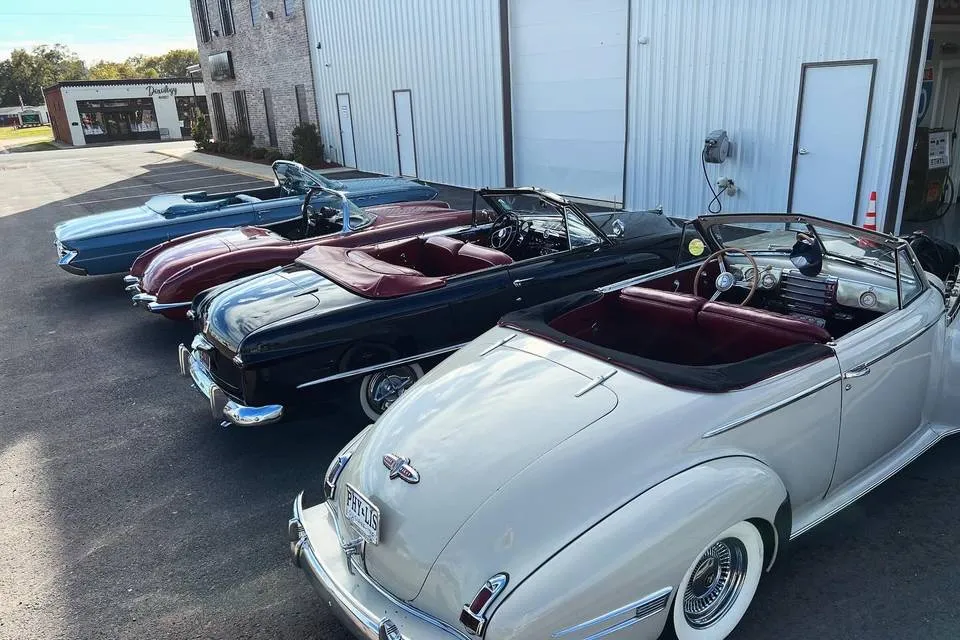
Today’s market is split between two divergent models: the professional fleet, which treats classic cars as an asset class to be managed with fleet-maintenance discipline, and the peer-to-peer model, which mimics the casual nature of home-sharing platforms. This evolution has significantly complicated the consumer’s task. While the professional fleet offers a higher probability of reliability, the peer-to-peer model offers access to a wider, more eclectic range of vehicles. Understanding this tension—reliability vs. variety—is essential to navigating the current landscape of vintage transit assets.
Conceptual Frameworks and Mental Models
-
The “Mechanical Sympathy” Framework: Vintage machines communicate through vibration, noise, and heat. The operator’s ability to interpret these signals before a failure occurs is the single best predictor of success.
-
The “Operational Redundancy” Model: Does the rental include a support vehicle or a dedicated field-support mechanic? For long-distance or high-stakes rentals, a vehicle without a backup plan is a failure-in-waiting.
-
The “Baseline-Stability” Assessment: Analyze the machine’s history. A vehicle that has been driven regularly is almost always more reliable than a “garage queen” that has sat stationary for months, as seals dry out and fluids degrade in the latter.
-
The “Safety-Gap” Model: Always factor in the difference between the vehicle’s era-specific safety profile and the modern traffic environment. Drive as if the vehicle is invisible and its brakes are a suggestion.
Taxonomy of Rental Categories and Operational Trade-offs
| Category | Typical Asset | Maintenance Model | Risk Profile |
| Fleet-Managed Professional | Highly serviced/standardized | In-house mechanics | Low |
| Boutique Restoration | High-aesthetic/low-mileage | Specialized outsource | Moderate |
| Peer-to-Peer Casual | Varies widely | Owner-dependent | High |
| Event/Production-Grade | High-polish/Non-functional | Cosmetic focus | Extreme |
Realistic Decision Logic
The selection must be driven by the “Mechanical-Requirement Profile.” If the goal is a 500-mile road trip through mountain passes, only a fleet-managed vehicle with a verifiable history of long-distance reliability is appropriate. If the goal is a static photo shoot or a short, local parade drive, a boutique restoration is sufficient. The primary failure mode is attempting to force a high-aesthetic, low-reliability asset into a long-distance transit scenario.
Operational Scenarios: Friction, Failure, and Recovery
Scenario 1: The “Vapor-Lock” Stagnation
A renter takes a carbureted 1960s vehicle on a hot, slow-moving urban transit. The fuel system heat-soaks, causing the engine to stall.
-
The Failure: The vehicle becomes an obstacle, blocking traffic and requiring a manual restart once the system cools.
-
The Second-Order Effect: Cumulative stress on the driver, leading to a loss of enjoyment and increased caution that alters the entire itinerary.
-
The Correction: Professional providers include a “field-remediation” card with the vehicle, detailing how to manage vapor-lock or common carburetor issues.
Scenario 2: The “Over-Heating” Compromise
A renter pushes an vintage cooling system too hard on a steep grade. The temperature gauge climbs, but the driver, lacking “mechanical sympathy,” fails to pull over.
-
The Failure: A blown head gasket, resulting in a permanent loss of the asset and a potential emergency service call.
-
The Second-Order Effect: Substantial financial and operational burden, often resulting in complex insurance disputes over “misuse” of the machine.
Dynamics of Cost, Opportunity, and Resource Allocation
The cost of vintage transit is rarely the rental fee alone. The hidden costs are the logistical “bandwidth” required to manage the machine’s fragility.
| Resource Variable | Direct Cost | Indirect Cost |
| Daily Rental Rate | Moderate | High (Availability) |
| Mechanical Risk | Low (Insurance) | High (Opportunity cost of failure) |
| Provisions/Consumables | Low | Low |
| Time-Buffer | N/A | High (Slow speeds; required stops) |
A professional budgeting model should treat the “Contingency Time” as a financial investment. If a trip is strictly time-bound, vintage transit is an inappropriate asset class.
Strategic Support Systems and Defensive Documentation
-
The Mechanical Pre-Brief: Insist on a 30-minute operational walkthrough that covers the specific cold-start, warm-up, and shutdown procedures for the individual vehicle.
-
The “Support-Contact” Manifest: Verify that the rental provider has a live, 24/7 support line staffed by someone who actually understands the vehicle’s mechanical systems, not just a call center.
-
Defensive Condition Audit: Document every scratch, oil weep, and interior blemish with high-resolution photos and video before leaving the lot, to protect against liability for pre-existing conditions.
-
Analog Navigation: Because vintage vehicles rarely feature modern digital infrastructure, carry a high-quality physical map and a reliable, independent GPS system.
-
Fluid-Level Monitoring: Adopt a habit of checking the engine oil and coolant levels every morning, just as the original owners would have done. This is the hallmark of responsible vintage transit.
The Risk Landscape: Compounding Liabilities
-
Environmental Sensitivity: Vintage machines are disproportionately affected by temperature, humidity, and altitude. A vehicle that runs perfectly at sea level may struggle with fuel mixtures at 5,000 feet.
-
The “Spare-Part” Problem: If the machine suffers a catastrophic failure in a remote area, the necessary parts may not exist on the modern supply chain. The repair time is measured in days, not hours.
-
Insurance Asymmetry: Many standard rental insurance policies specifically exclude “classic” or “high-value” vehicles, leaving the renter personally liable for massive repair costs in the event of an incident.
Governance, Maintenance, and Long-Term Adaptation
-
The Post-Transit Audit: Following a drive, conduct a quiet inspection for new fluid leaks or unusual sounds. Report these to the provider immediately.
-
Adaptive Monitoring: If the machine demonstrates a recurring issue (e.g., erratic idle), adjust your driving pattern to accommodate the limitation rather than forcing the machine to perform.
-
The Layered Checklist: Your packing list should include items that modern cars make redundant: a basic tool kit, rags, a flashlight, and extra fluids (oil, coolant, brake fluid).
Metrics, Documentation, and Evaluation
-
Leading Indicator: “Idle Quality.” (A stable, smooth idle is the strongest indicator of a well-tuned vintage engine).
-
Lagging Indicator: “Support-Call Frequency.” (The number of times technical assistance was required).
-
Documentation Example 1: The Mechanical Log – A dedicated notebook kept in the vehicle, recording engine temperatures, oil pressure readings, and any observed idiosyncrasies during the transit.
-
Documentation Example 2: The Condition Passport – A dated record of the vehicle’s state, signed by both the renter and provider upon pick-up and return.
Deconstructing Industrial Misconceptions
-
Myth: “All classics are unreliable.” Correction: A well-sorted, daily-driven classic is often more reliable than a complex modern vehicle. The “unreliability” usually stems from poor maintenance regimes, not the age of the design.
-
Myth: “The rental provider handles everything.” Correction: The renter is the primary operator and manager of the machine during the rental period. The provider’s service only begins once the operator has failed to resolve an issue.
-
Myth: “Driving a classic is like driving a modern car.” Correction: Vintage driving requires a constant, active engagement with the mechanical systems. It is not a passive activity.
-
Myth: “The insurance company will just pay for it.” Correction: Classic car insurance is highly specialized and restrictive. Misuse—such as pushing the engine too hard—is often specifically excluded from coverage.
-
Myth: “The restoration is what matters.” Correction: For a rental, mechanical reliability and “sorted” systems matter more than the quality of the paint or the upholstery.
Conclusion: The Synthesis of Strategic Judgments
Engaging with the market for classic vehicles is fundamentally about the transition from passive transit to active machine-management. The best classic car rentals america are those that offer a transparent mechanical baseline, a clear support protocol, and a realistic understanding of the asset’s capabilities. By adopting a disciplined approach to asset appraisal, prioritizing mechanical sympathy, and preparing for the inherent volatility of vintage machinery, the driver transforms a rental into an educational engagement with automotive heritage.