Top Mountain Drives in America: A Strategic Guide to High-Elevation Transit
The American mountain drive is more than a mere passage through elevated terrain; it is a profound intersection of civil engineering, geography, and the human desire for environmental immersion. Unlike lowland transit, which prioritizes speed and distance, the mountain route forces a deceleration, mandating a synchronization between machine and slope. The complexity of these drives lies in their vulnerability—they are perpetually subjected to the extreme forces of erosion, seismic activity, and seasonal climate shifts. To traverse them is to engage with a fragile, highly managed infrastructure that requires constant monitoring and precise navigation.
Most travel discourse treats the mountain drive as a static commodity—a scenic backdrop for photography or a check-box on a bucket list. This is a profound mischaracterization. These routes are operational systems. They involve complex grade management, avalanche mitigation, and high-altitude logistics that dictate everything from fuel consumption to vehicle maintenance intervals. A successful traversal requires the driver to shift from a consumer of views to a manager of vehicular performance, understanding that the topography is not just an aesthetic feature but a physical force that dictates the parameters of movement.
This analysis is intended for the reader who seeks a deep understanding of the structural, logistical, and historical underpinnings of high-elevation transit in the United States. We will move beyond the superficial, ranking-driven lists of “must-see” vistas to examine the principles of route selection, the risks inherent in alpine environments, and the systemic challenges faced by those who maintain these vital arteries of commerce and tourism. By establishing a rigorous analytical framework, we can elevate the mountain drive from a casual pastime to a purposeful, informed exploration of the American landscape.
Understanding “top mountain drives in America.”
To arrive at a rigorous definition of the top mountain drives in America, one must transcend the simplistic notion of “scenic beauty.” Instead, one must evaluate a route by its technical complexity, its engineering history, and its ecological significance. The common failure in public discourse is the reduction of these drives to a singular metric—often Instagram-ready vistas—which ignores the profound variance in operational difficulty. What the average traveler classifies as a “top” drive, an engineer or a long-haul operator might classify as a “high-risk, high-maintenance bottleneck.”
The danger in this oversimplification is the false sense of security it provides to the inexperienced driver. A route labeled as a premier experience in a travel magazine can, under adverse weather or sudden mechanical strain, quickly become an active liability. Identifying the top mountain drives in America requires the ability to balance the aesthetic payoff against the technical demand. It involves acknowledging that the most “rewarding” routes are frequently those where the margin for error is thinnest, requiring a higher level of alertness and preparation from the individual behind the wheel.
Furthermore, these drives are rarely static. They are living systems, subject to the unpredictable evolution of the natural environment. A route that held the title of a “premier drive” a decade ago may today suffer from significant infrastructure decay or, conversely, may have undergone a massive capital investment in safety. Thus, the assessment of these drives must be grounded in an understanding of the ongoing struggle between human infrastructure and geological time. To prioritize these routes effectively, one must look at them not as fixed monuments, but as transient, high-effort human achievements in a landscape of geologic instability.
Historical Context: From Wagon Trails to Modern Byways
The evolution of high-elevation transit in the United States is largely a history of adapting ancient migration paths to the requirements of the internal combustion engine. The pioneer routes through the Sierras, the Rockies, and the Appalachians were often built upon pre-existing indigenous trails and early mining exploration routes. These paths were chosen not for their safety, but for their necessity; they were the path of least resistance through rugged, inaccessible territory.
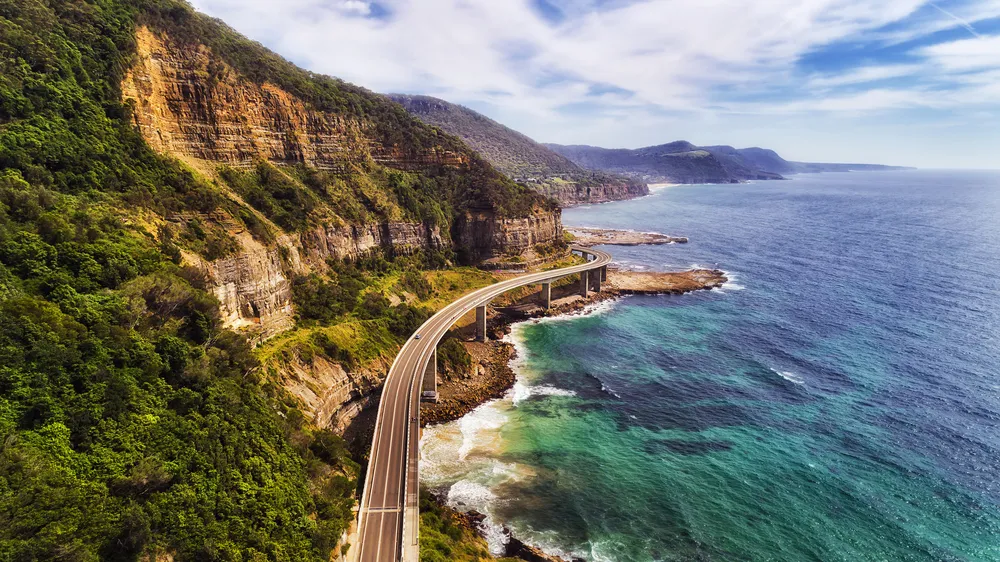
The modern “scenic byway” designation is a relatively recent, mid-20th-century development, born from a reaction to the standardized, high-speed monotony of the Interstate Highway System. As the nation built the high-speed corridors that bypassed the rugged terrain of the interior, a counter-effort emerged to preserve the older, more complex routes. This effort transformed these roads from utilitarian conduits of goods and people into intentional sites of “experience.” The preservation of these routes represents a triumph of cultural planning, ensuring that the legacy of earlier transportation engineering remains accessible to the contemporary traveler.
Conceptual Frameworks for High-Elevation Logistics
To manage the complexities of elevated transit, the following mental models provide a necessary foundation:
-
The “Grade-Heat-Altitude” Equilibrium: High-elevation driving shifts the vehicle’s operating parameters. Steep grades (grade), friction-heavy braking (heat), and thin oxygen-rich fuel mixtures (altitude) create a trifecta of stress. Every route should be evaluated through the lens of how it impacts this equilibrium.
-
The “Energy-Management” Model: In lowland driving, energy management is simple. In mountain transit, potential energy (elevation gain/loss) is a massive, often overlooked variable. Managing fuel consumption is not just about throttle control; it is about managing the kinetic potential of the vehicle on descents.
-
The “Weather-As-Architecture” Framework: Treat the alpine climate as a physical structure. It is not an atmospheric backdrop; it is a set of constraints that define the route’s availability, safety, and logistical viability. If the forecast indicates a shift in the “alpine architecture,” the plan must change immediately.
-
The “Fail-Safe” Principle: Mountain driving is inherently higher risk. A route is only as good as its fail-safe options—the turnouts, the runaway truck ramps, the emergency service corridors, and the cellular dead zones.
Taxonomy of Mountain Routes and Operational Trade-offs
| Route Type | Engineering Focus | Primary Driver | Risk Factor |
| Alpine Pass (High Elevation) | Grade Management | Seasonal Access | Snow/Ice; Altitude sickness |
| Canyon Corridor | Erosion Control | Geological Feature | Falling rock; narrow geometry |
| Ridgeline/Skyway | Vista Integration | Panoramic Scale | Extreme exposure; wind |
| Forested Basin | Wildlife Management | Ecological Density | Animal crossings: visibility |
Realistic Decision Logic
When evaluating the top mountain drives in America, apply the “Constraint-Performance” test. Does the vehicle have the torque for the climb? Does the braking system have the capacity for the descent? Is the driver’s experience level matched to the route’s geometry? If the answer to any of these is no, the “top” drive is, in reality, a high-liability environment. A rational choice is to match the route’s difficulty to the driver’s and vehicle’s actual operating capacity.
Operational Scenarios: Navigating Topographic Friction
Scenario 1: The “Descending Overheat” Failure
A driver descends a 10% grade over 15 miles without using lower gears, relying solely on friction brakes.
-
The Constraint: The brake fluid reaches a boiling point, leading to catastrophic loss of stopping power.
-
The Failure Mode: The vehicle relies on an emergency ramp or, in the absence of one, a collision.
-
Second-Order Effect: The psychological trauma of the event renders the driver incapable of completing the journey.
Scenario 2: The “Altitude-Stall” Bottleneck
An older, non-turbocharged vehicle attempts a rapid ascent to 12,000 feet.
-
The Constraint: The fuel-air mixture becomes too rich for the thin air, causing engine hesitation or complete stalling.
-
The Failure Mode: Blocking the only lane on a narrow mountain pass during a period of high traffic.
-
Second-Order Effect: Creating a significant logistical traffic jam that traps other travelers in an exposed environment.
Dynamics of Energy, Maintenance, and Opportunity
The cost of high-elevation transit is significantly higher than lowland mileage.
| Cost Variable | Lowland Impact | Mountain Impact |
| Fuel Burn | Standard | +30–50% (Climbing) |
| Brake Wear | Standard | +100–200% (Descending) |
| Tire Stress | Standard | Elevated (Sharp curvature/temp flux) |
| Maintenance Cycle | Standard | 1.5x – 2x higher frequency |
The opportunity cost here is “Time-Density.” Mountain transit is slow. For every 100 miles of driving, one must budget twice the time that would be required for lowland transit.
Defensive Driving and Strategic Support Systems
-
The “Lower-Gear” Protocol: For every significant descent, the vehicle must be in a gear that holds its speed without constant brake engagement. This is the fundamental rule of alpine driving.
-
The “Off-Line” Manifest: In high mountains, digital navigation is often non-existent. Carry high-detail, physical topographical maps.
-
The “Emergency-Kit” for Altitude: Standard first aid is insufficient. Altitude-specific medical kits, oxygen supplements, and cold-weather gear for a 24-hour unplanned holdover are mandatory.
-
Static Communication: Relying on mobile signal is a systemic failure. Carry a satellite-based communication system for emergency signaling.
-
Fluid Management: Carry extra coolant, brake fluid, and engine oil. The combination of heat and altitude puts extreme stress on all fluid systems.
The Risk Landscape: Compounding Liabilities
The alpine landscape is a complex, high-friction zone where risks are additive and multiplicative.
-
Environmental Compounding: Weather is not a singular event. It is a set of conditions—wind, rain, snow, and light—that combine to alter the road’s physical surface.
-
Geologic Instability: Unlike roads on flat plains, mountain roads are built on unstable ground. Rockfall and landslides are not aberrations; they are constant, inevitable geologic realities.
-
Human-System Misalignment: The primary risk is the gap between the driver’s perception of the road’s difficulty and the road’s physical reality. The “top mountain drives in aAmerica are often the ones where this gap is most dangerous.
Governance, Review, and Long-Term Adaptation
-
Post-Trip Audit: After a significant mountain drive, inspect the vehicle’s braking system and tires. These are the “leading indicators” of the drive’s stress.
-
Adjustment Triggers: If a drive feels “too complex” or creates high levels of stress, re-evaluate the route selection. Adjust toward “lower-complexity” mountain routes until skills match the landscape’s difficulty.
-
Layered Checklist: Your vehicle’s health checklist should be “High-Altitude Adaptive,” emphasizing cooling system integrity, brake life, and tire pressure management.
Metrics, Documentation, and Qualitative Assessment
-
Leading Indicator: “Fuel range at altitude.” (Measures engine efficiency).
-
Lagging Indicator: “Brake temperature/vibration.” (Measures descending efficiency).
-
Documentation Example 1: The Alpine Log – Tracks vehicle performance data alongside route geography to identify “high-stress” segments.
-
Documentation Example 2: The Risk Registry – A living document of potential failure points for a route, updated after every drive.
Deconstructing Industrial Misconceptions
-
Myth: “All-wheel drive makes you invincible.” Correction: AWD aids acceleration; it does absolutely nothing for braking or cornering in an alpine environment.
-
Myth: “Downhill coasting saves fuel.” Correction: It is a dangerous, mechanical-liability-inducing practice that overheats brakes and provides no control.
-
Myth: “The ‘top’ drives are the most popular ones.” Correction: The most popular drives are the most congested, and congestion is an operational hazard in high-mountain terrain.
-
Myth: “Modern technology fixes the grade.” Correction: Physics remains unchanged. Gradient is a physical reality that technology can mitigate but never override.
-
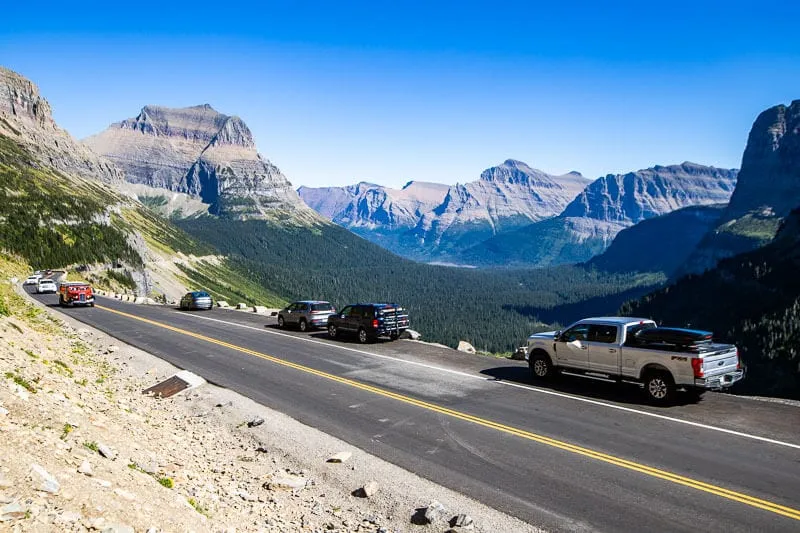
Myth: “I can stop anywhere to enjoy the view.” Correction: Mountain roads have limited, designated pull-outs. Stopping outside these areas is a critical safety failure that disrupts the flow of transit and risks collision.
Conclusion: The Synthesis of Strategic Judgments
Engaging with the top mountain drives in America requires a fundamental respect for the landscape. These routes are not merely visual assets; they are complex, high-effort engineering systems that exist at the edge of geological possibility. Success in this terrain is defined by the ability to manage the interplay between vehicle capacity, topographic reality, and personal limitation. By abandoning the consumerist approach to scenic transit and adopting an operational framework of stewardship and preparedness, the driver transforms the act of driving into a mastery of the vertical landscape. There is no singular “top” drive; there is only the drive that matches the capabilities of the individual to the demands of the mountain.